
$3.00

13 in stock
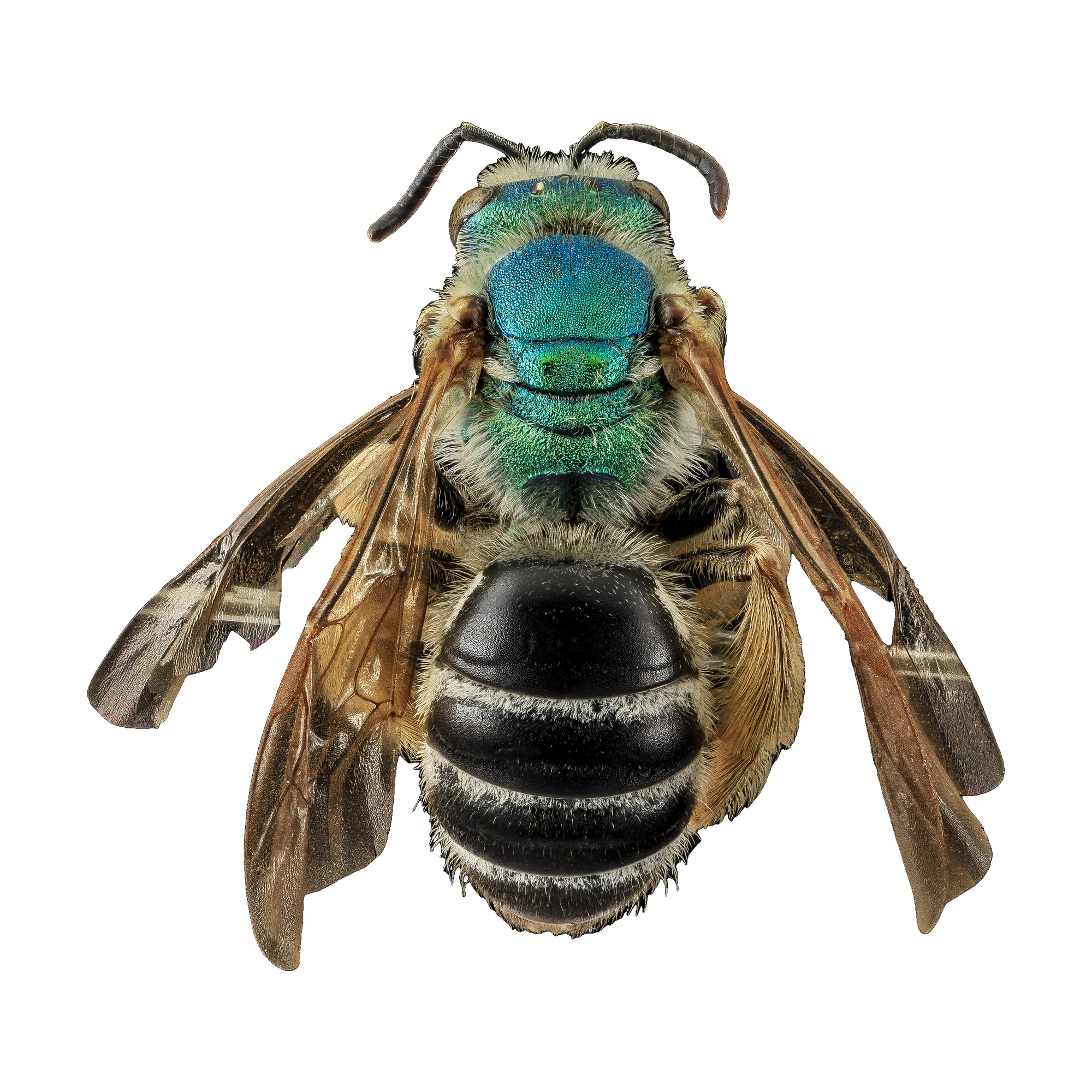
Metallic Green Bees in the genus Agapostemon, also known as Striped Sweat Bees, are medium-sized sweat bees about 7 to 15 mm long. The head and thorax shine a brilliant metallic green, often with blue highlights, and are covered with pale hair. Males have a black abdomen with bold yellow stripes and mostly yellow legs. Females of most species are green all over, but the female Bicolored Striped Sweat Bee (Agapostemon virescens), the most common species in Wisconsin, has a black abdomen with narrow bands of white hair. A raised rim that runs all the way around the back of the thorax separates them from other green sweat bees. These are real, US-collected specimens from Douglas County, Wisconsin.
The genus ranges across the Americas, from southern Canada to Argentina, with about 14 species in the United States and Canada. These bees live in sunny, open places with bare or sparsely covered soil and plenty of flowers, such as prairies, meadows, old fields, roadsides, lawns, parks and gardens. In Wisconsin they are recorded statewide, and they reach the far north of the state along Lake Superior.
Females are fast fliers that gather pollen and nectar from many kinds of flowers, especially daisies, asters, goldenrods and other members of the aster family. Males fly more slowly as they patrol flowers in search of mates. Females dig deep vertical burrows in flat or sloping ground. In Agapostemon virescens many females can share a single entrance, with one bee guarding the hole, but each female builds and stocks her own cells. Despite the name “sweat bee,” they are seldom drawn to human sweat, and females sting only if handled roughly.
Each brood cell is stocked with a ball of pollen and nectar, and the female lays one egg on it. The young go through complete metamorphosis (egg, larva, pupa, adult) underground. In cool northern areas such as Wisconsin there is usually one generation a year. Females that wintered over start nesting in late spring and early summer, and their offspring emerge in late summer, when males are common on flowers. These specimens were collected on September 5, during that late-season flight. The males die in fall, and only mated females survive the winter underground.
Metallic Green Bees are beneficial native pollinators of wildflowers, garden plants and crops. They visit many crop and garden flowers, and some species are being studied as pollinators that could take over some of the work honey bees do. They cause no damage and are not considered pests.
This preserved specimen educates on one of North America’s most colorful native bees and its role as a pollinator, suitable for displays or studies. Check it out on BugGuide! https://bugguide.net/node/view/7997
| Weight | 0.01 lbs |
|---|
Only logged in customers who have purchased this product may leave a review.
Reviews
There are no reviews yet.