
$3.00
 <—
10 in stock
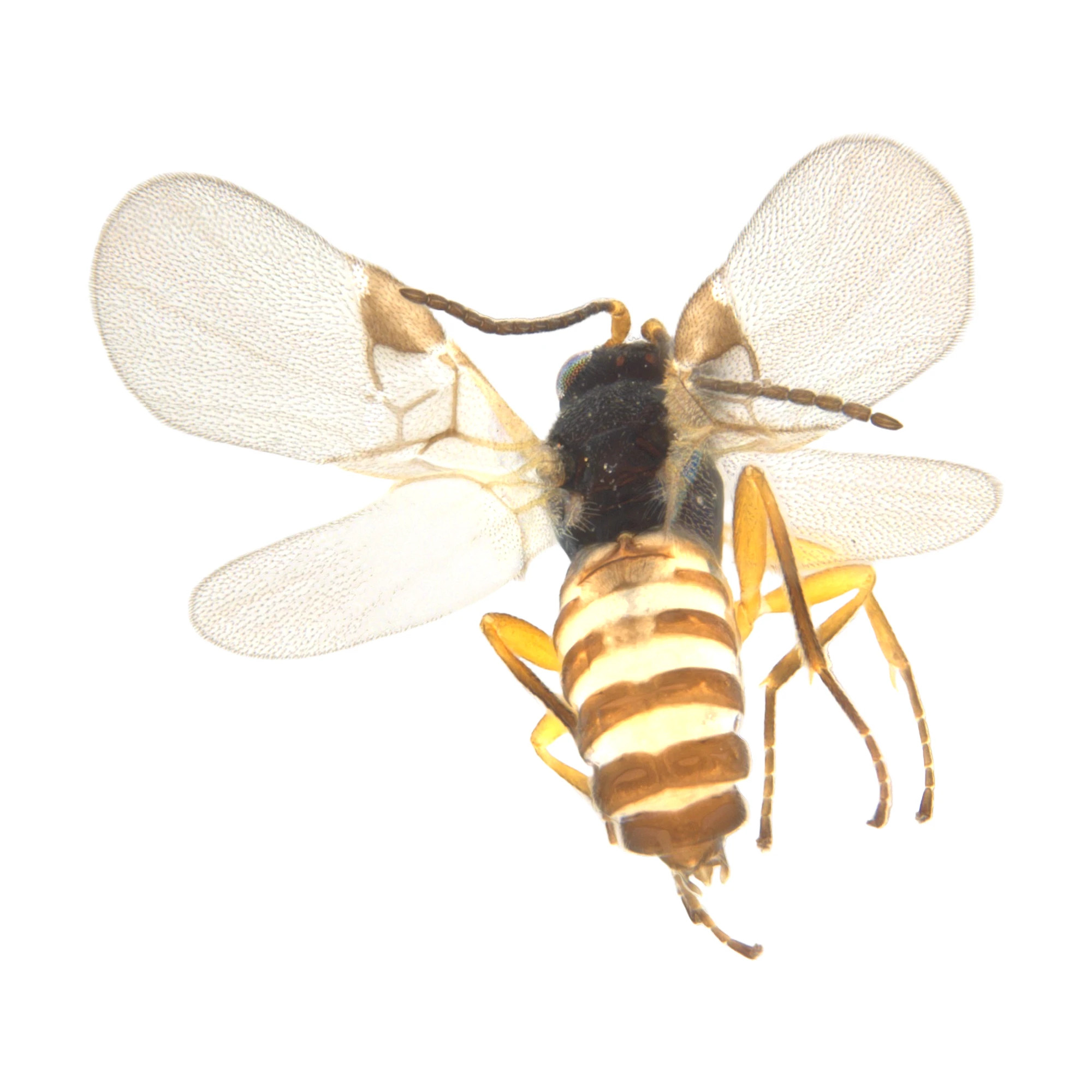
Braconid wasps, family Braconidae, are slender parasitoid wasps with long, many-segmented antennae (usually 16 or more segments), two pairs of clear or smoky wings and a narrow waist. Many are black, brown, orange or yellow, often in combination. The specimens in this listing are tiny, about 1 to 2 mm long, although the family as a whole ranges from about 1 mm to around 15 mm. These specimens are identified only to family, so the species may vary from one specimen to the next and may not match the wasp in the photo.
Braconidae is one of the largest insect families, with about 20,000 described species worldwide and more than 1,700 in North America north of Mexico. Braconid wasps are found on every continent except Antarctica and live almost anywhere their host insects do, including forests, meadows, farm fields, wetlands and backyard gardens.
Nearly all braconids are parasitoids. The female lays her eggs on or inside another insect, most often a caterpillar, beetle grub, fly larva or aphid, and the wasp larvae feed on that host and eventually kill it. Adults are often seen visiting flowers for nectar or searching leaves and stems for hosts. Most species are harmless to people, and their tiny size makes them easy to overlook.
Braconid wasps go through complete metamorphosis (egg, larva, pupa, adult). Depending on the species, the larvae develop inside the host or feed on it from the outside. Many species spin small silken cocoons to pupate, sometimes in clusters on the outside of a caterpillar, while aphid parasitoids pupate inside the dead, swollen aphid, called a mummy. Some species complete several generations in a single season.
Braconid wasps are highly beneficial. They help keep many crop, garden and forest pests in check naturally, and several species are raised and released for biological control of pests such as aphids, caterpillars, fruit flies and wood-boring beetles. They are not pests themselves.
This preserved specimen educates on tiny parasitoid wasps and their role in natural pest control, suitable for displays or studies. Check it out on BugGuide! https://bugguide.net/node/view/170
Only logged in customers who have purchased this product may leave a review.
Reviews
There are no reviews yet.