
$14.95
 <—
1 in stock
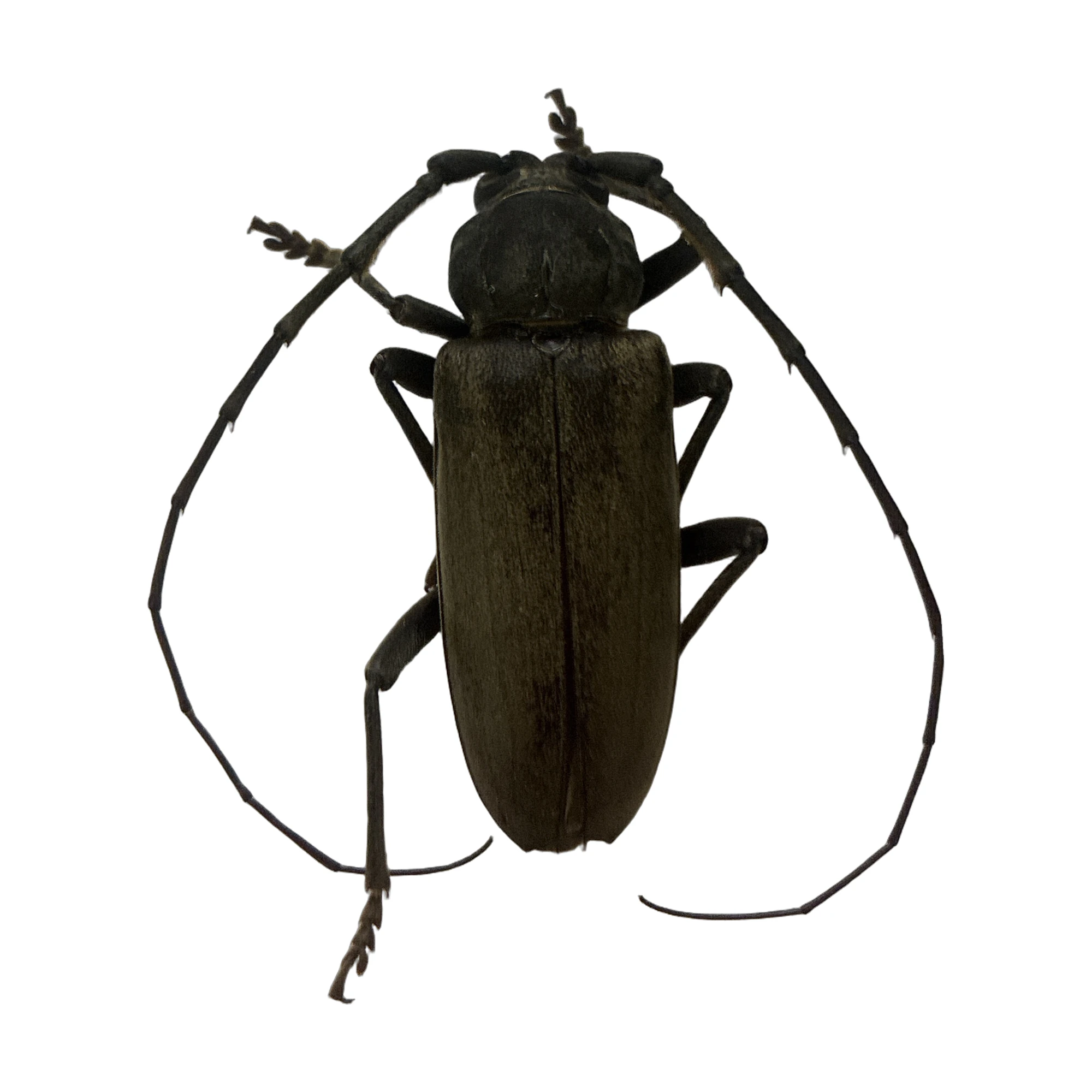
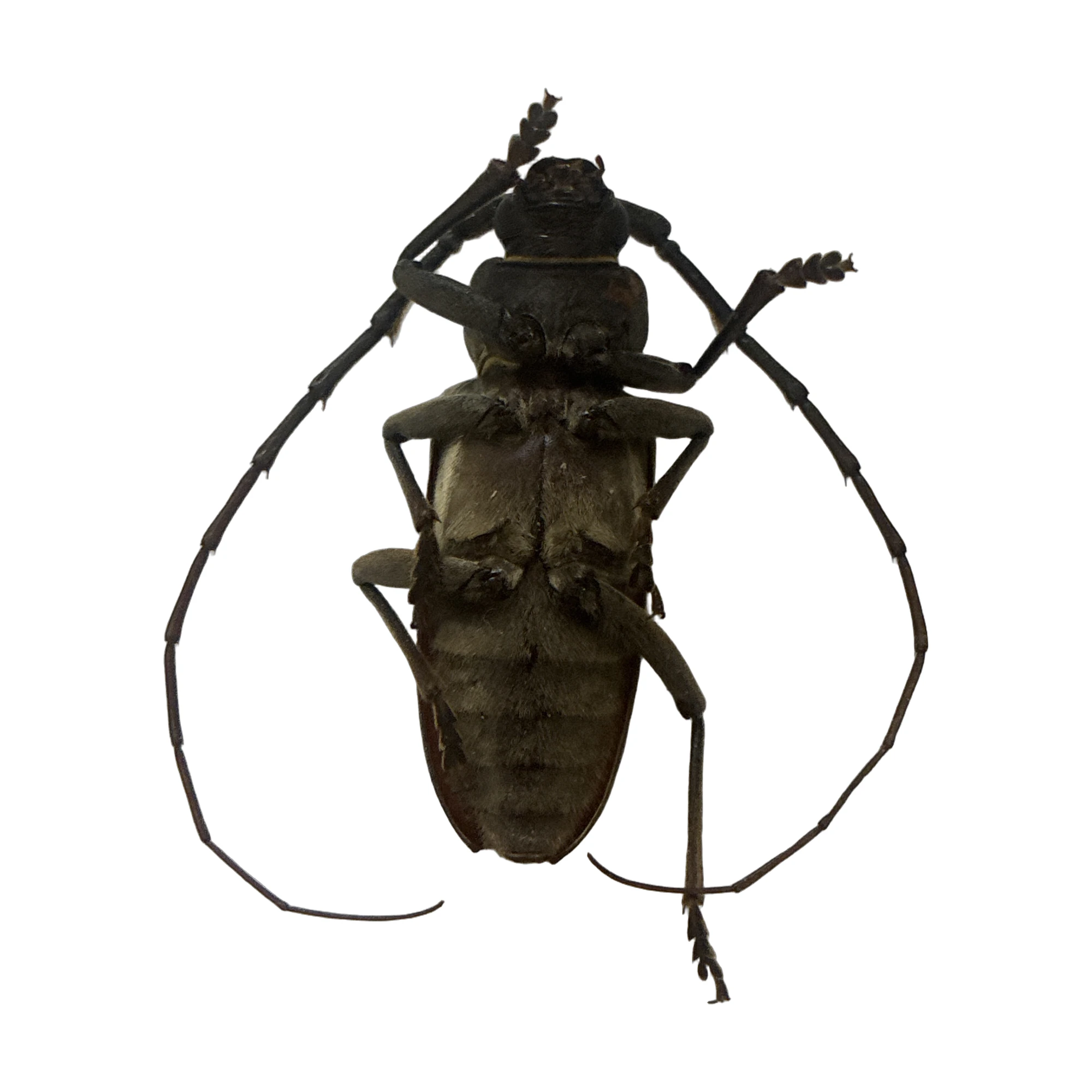
Enaphalodes hispicornis is a large, long-bodied longhorn beetle, usually about 25 to 40 mm long. This specimen measures 43 mm, a little larger than the usual range. It is brown to dark brown with a fine coat of short hair and long antennae that carry small spines on the segments. The species name hispicornis means “brush-horned.”
It has been recorded across the southern half of the United States from the Atlantic coast west to Idaho and California, with scattered records as far north as Maryland, Illinois, Michigan and Minnesota, and south into Mexico. It is most common in the southwestern United States. It lives in oak woodlands and other areas where oaks grow.
Adults are active at night and are strongly attracted to lights, which is how most specimens are collected. Like other members of the genus, adults do a little feeding on twigs and foliage and gather at sap flows on trees.
The larvae are wood borers that feed inside oaks, including coast live oak in California. They go through complete metamorphosis (egg, larva, pupa, adult), spending most of their lives as grubs tunneling in the wood before pupating and emerging as adults in summer.
Because the larvae bore in oak wood, this beetle is part of the community of insects that break down oak trees, but it is rarely reported as a pest. Its eastern relative, the red oak borer (Enaphalodes rufulus), is a serious pest that damages oak lumber.
This preserved specimen educates on oak-boring longhorn beetles of North America, suitable for displays or studies. Check it out on BugGuide! https://bugguide.net/node/view/203237
Only logged in customers who have purchased this product may leave a review.
Reviews
There are no reviews yet.