
$3.00
 <—
5 in stock
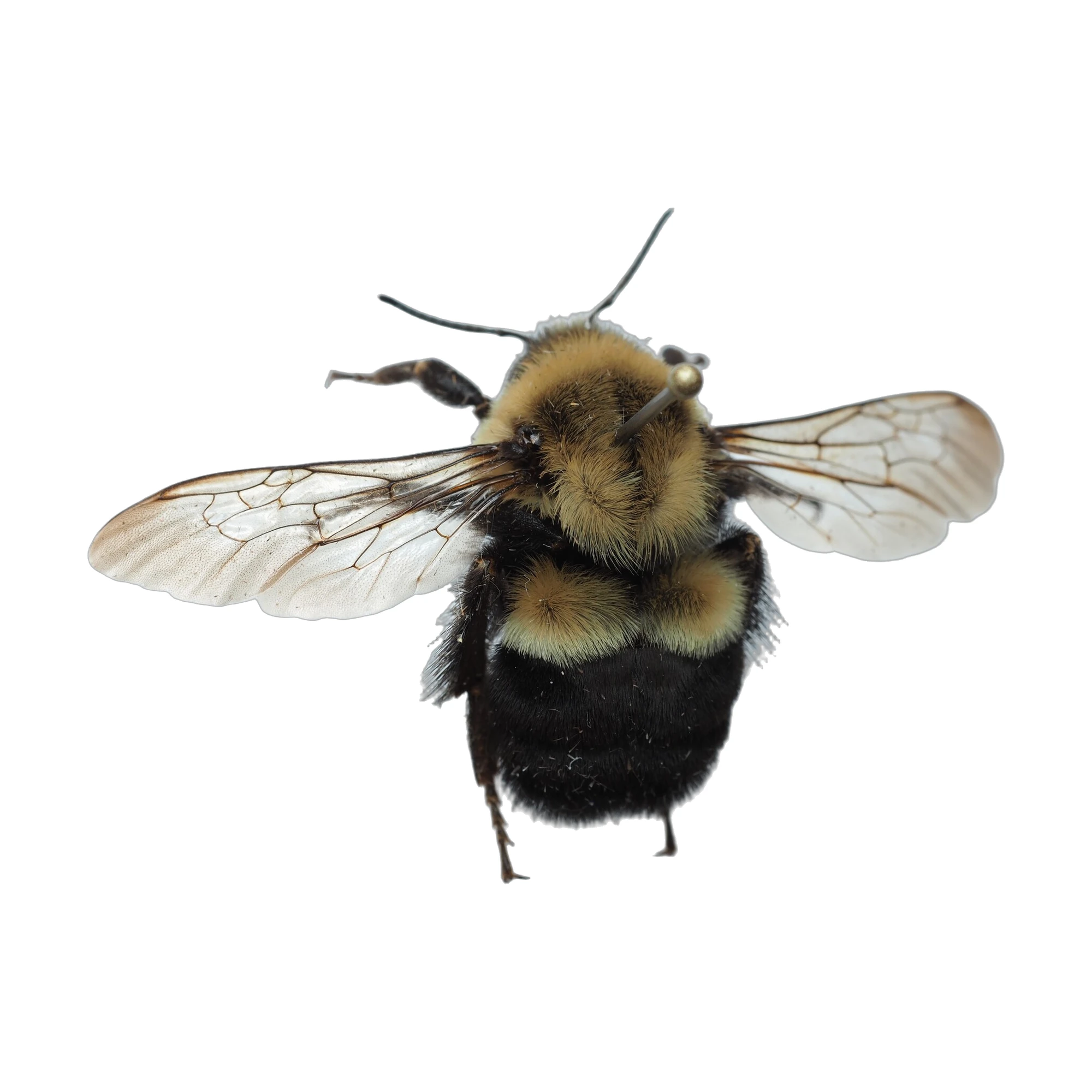
Bombus impatiens is a medium-sized bumble bee. Workers are about 8.5 to 16 mm long and queens reach 21 mm. The thorax is covered in yellow hair, and the abdomen is black except for a yellow band on the first segment. The face and legs are black.
It is found across eastern North America, from southern Ontario and Maine south to Florida and west to the Great Plains, and it keeps spreading where it is sold for greenhouse use. It lives in fields, gardens, farms, parks, woodland edges and cities.
Common eastern bumble bees live in social colonies that can grow to several hundred workers, one of the largest of any North American bumble bee. They visit a huge range of flowers from early spring into late fall and buzz-pollinate flowers like tomatoes and blueberries. They are gentle away from the nest.
A mated queen comes out of hibernation in spring, finds an underground cavity such as an old rodent burrow, and builds wax cells stocked with pollen. Her larvae go through complete metamorphosis (egg, larva, pupa, adult). Workers take over foraging through summer, and in late summer the colony raises new queens and males. Only the mated new queens survive winter.
This is one of the most beneficial bees in North America. It is raised commercially and shipped to greenhouses and farms to pollinate tomatoes, peppers, blueberries, cranberries and other crops, and it pollinates countless wildflowers and garden plants.
This preserved specimen educates on native bumble bees and crop pollinators, suitable for displays or studies. Check it out on BugGuide! https://www.bugguide.net/node/view/56797
Only logged in customers who have purchased this product may leave a review.
Reviews
There are no reviews yet.