Appearance
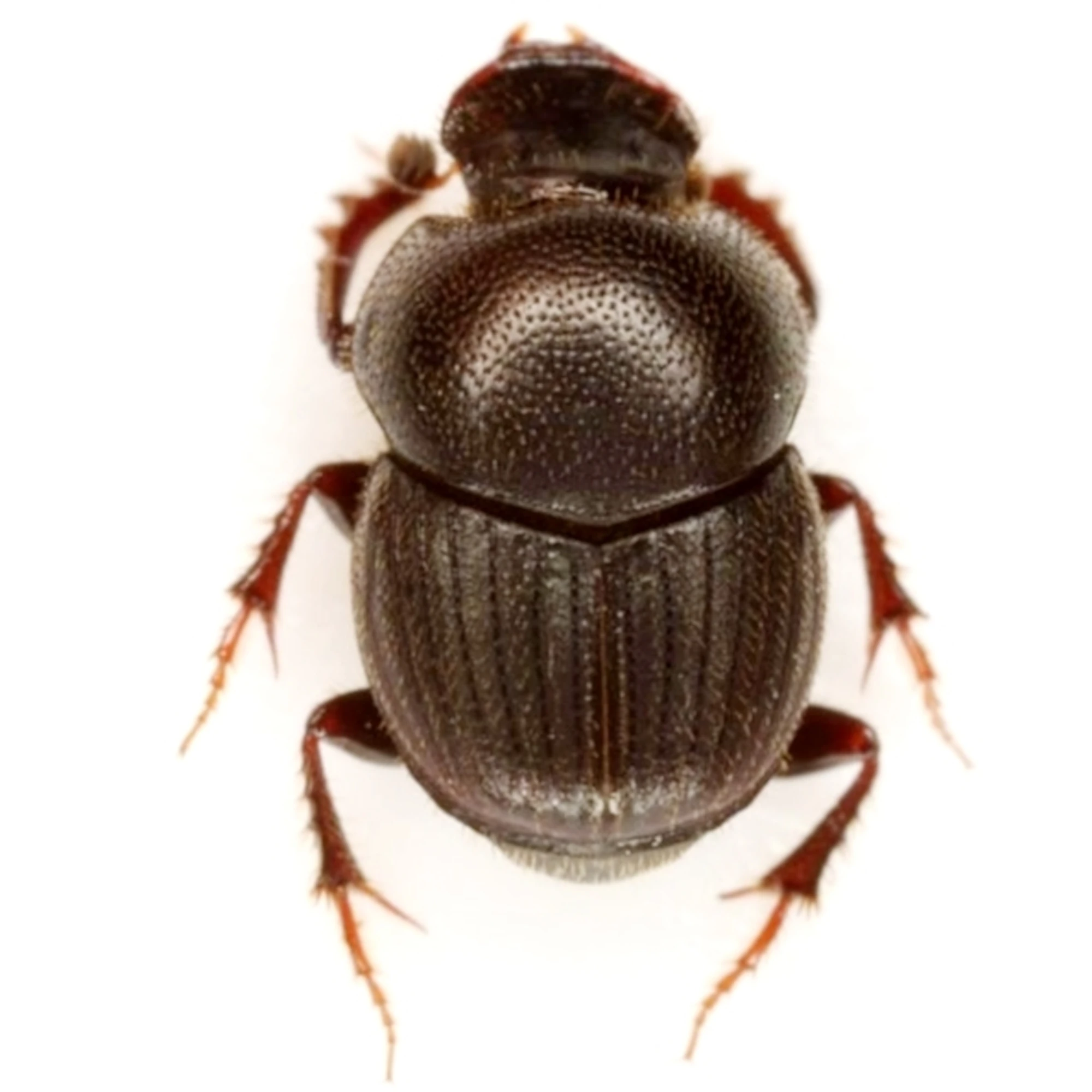
Dung Beetles in genus Onthophagus range from 4 to 11 mm in length. They feature a robust, oval body often dark brown or black. Males commonly display prominent horns on the head or pronotum for combat. Females lack large horns but show smaller tubercles. The elytra appear smooth or punctured, aiding in identification among species.
Habitat and Range
These beetles inhabit areas with abundant mammal dung like pastures, woodlands, and farms. The genus holds worldwide distribution with high diversity in tropical regions. In North America, many species occur from Canada to Mexico, thriving where livestock or wildlife provide fresh dung.
Behavior
Adults locate fresh dung quickly and burrow beneath it or roll balls away for burial. They use dung as food and brood provisions. Males defend resources with horns during competition. Larvae develop inside buried dung balls, consuming the material as they grow.
Life Cycle
Females lay single eggs in dung balls buried in soil. Larvae hatch and feed on the provisions through several instars. Pupation occurs within the ball in an earthen cell. Adults emerge to continue the cycle, with multiple generations possible in warm climates. One generation dominates in cooler areas.
Economic Impact
Highly beneficial, dung beetles recycle nutrients by burying manure, improving soil fertility and reducing fly breeding sites. This lowers parasite loads in livestock pastures without chemicals. No pest status; they support sustainable agriculture and ecosystems.
This preserved specimen highlights the horned male form, ideal for scarab education and displays. Check it out on BugGuide! https://bugguide.net/node/view/3670

 <—
<—