Appearance
Marsh Flies range from 3 to 12 mm in length. They feature slender, ant-like bodies with long legs and antennae. Wings often show spots or patterns in many species. Coloration varies from yellow to brown or black. Eyes appear large and prominent. Larvae develop as maggots inside snail hosts or nearby.
Habitat and Range
These flies inhabit marshes, wetlands, streamsides, meadows, and moist forests. Larvae require snails in damp environments. The family holds worldwide distribution with over 500 species. In North America, about 170 species occur, thriving in diverse wet habitats from coast to coast.
Behavior
Adults feed on nectar or honeydew while flying slowly in sunny spots. Females lay eggs on or near snails. Larvae act as parasitoids or predators, entering snail shells to feed internally or externally. This specialized hunting targets freshwater and terrestrial snails exclusively.
Life Cycle
Females deposit eggs singly or in groups near host snails. Larvae hatch and seek snails, developing through three instars over weeks to months. Pupation occurs in soil or snail shells. Adults emerge in warmer seasons. Multiple generations per year possible in mild climates.
Economic Impact
Beneficial overall, marsh flies control snail populations naturally. Certain snails serve as intermediate hosts for livestock parasites like liver flukes. Larval predation reduces these vectors, aiding agriculture without chemicals. No pest status noted.
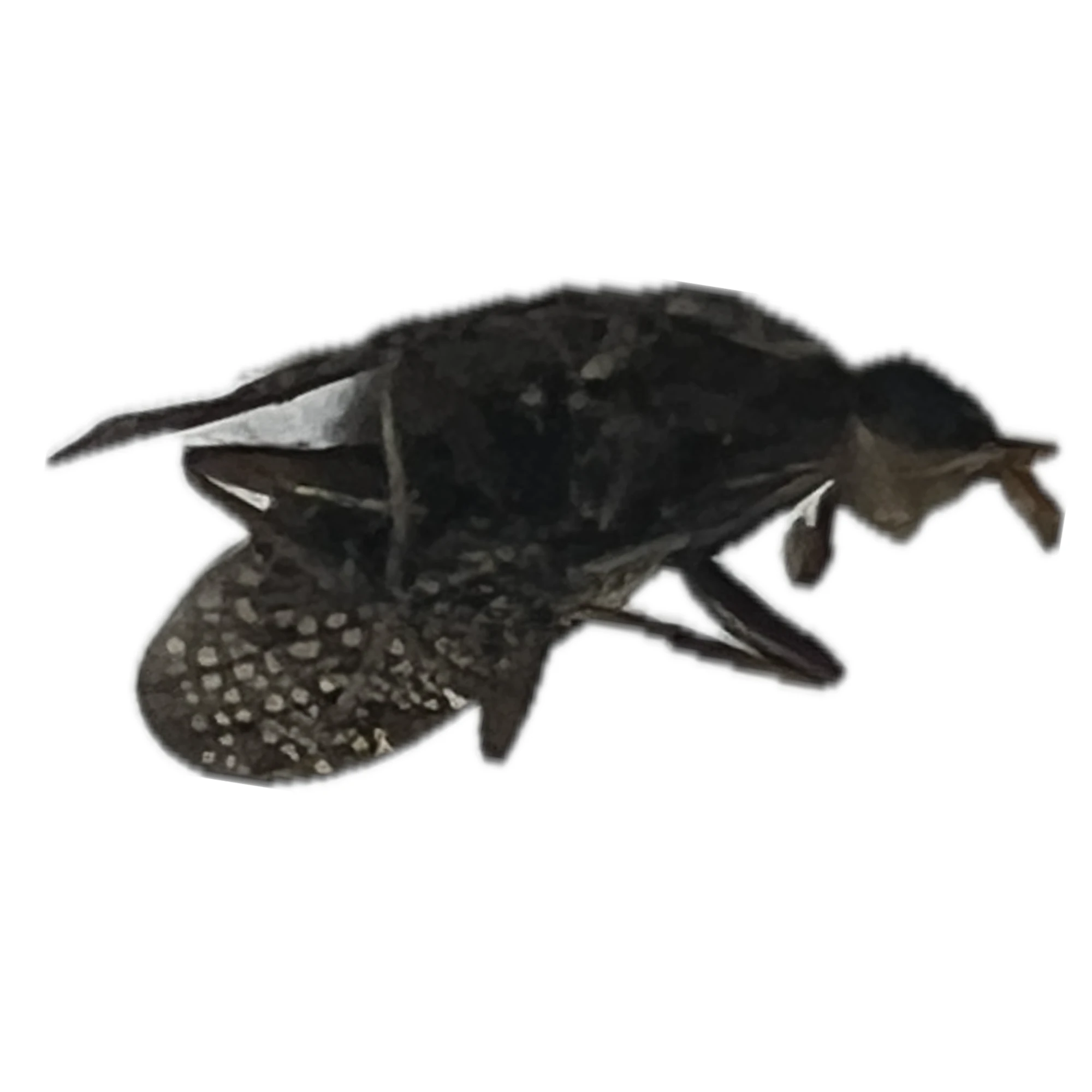
This preserved specimen highlights the snail-killing larval adaptations, ideal for dipteran education and displays. Check it out on BugGuide! https://bugguide.net/node/view/7740

 <—
<—