Appearance
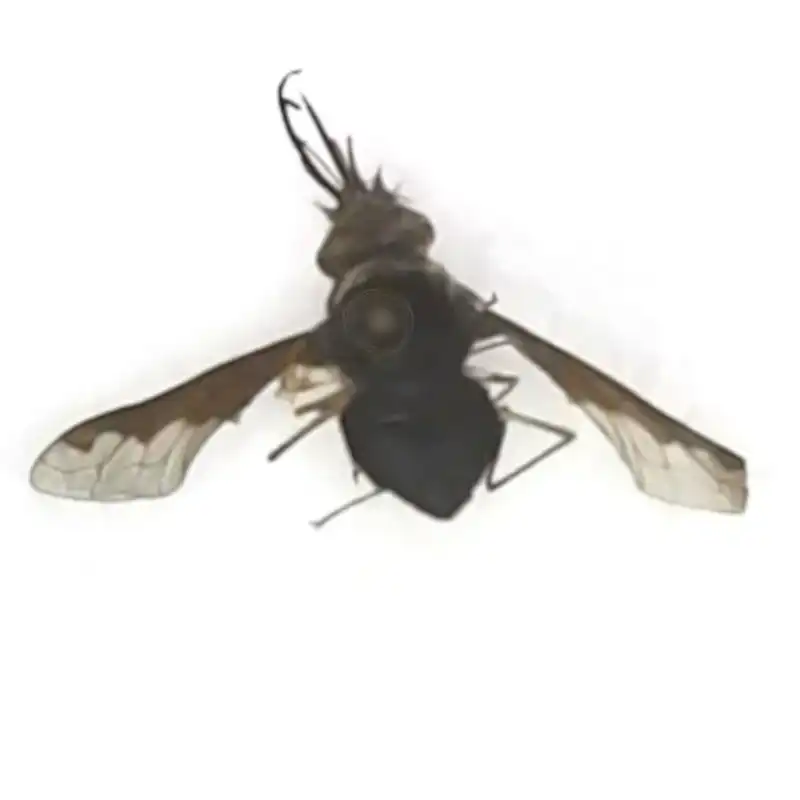
The Bee Fly Systoechus sp. grows to 6-10 mm long. It has a stout, rounded body covered in dense yellow or brownish hairs that mimic bumblebees. The abdomen shows alternating dark and light bands. Clear wings feature a dark spot near the leading edge. A long, slender proboscis extends as long as the body for sipping nectar. Yellow hairs dust the legs, adding to its fuzzy, puffy look.
Habitat and Range
This genus inhabits meadows, grasslands, gardens, parks, and woodland edges with abundant flowers. It thrives in sunny, open areas near soil suitable for egg-laying. The range spans North America transcontinentally, with species from Oregon to Arizona, Michigan to Texas, and beyond. Holarctic distribution includes parts of Europe and Asia for some species like S. vulgaris.
Behavior
Adults hover skillfully over blossoms, extending their proboscis to feed on nectar and pollen as efficient pollinators. They exhibit Batesian mimicry of bees to deter predators and sometimes feign death when threatened. Larvae actively hunt, burrowing into grasshopper egg pods to consume the contents. This predatory habit aids in controlling pest populations naturally.
Life Cycle
Females lay eggs on or near grasshopper egg capsules in soil during warm months. Larvae hatch and penetrate the pods, feeding voraciously on the eggs over several weeks. They then pupate within the soil, overwintering in diapause. Adults emerge in spring or early summer to mate and feed, completing one generation per year in temperate zones.
Economic Impact
Bee Flies in Systoechus sp. prove beneficial overall. Adults pollinate crops and wildflowers, boosting yields in gardens and fields. Larvae prey on grasshopper eggs, a major agricultural pest, reducing outbreaks without chemicals. No harmful effects noted, supporting integrated pest management economically.
This preserved specimen highlights the bee-mimicking hairs and hovering flight, ideal for pollinator education and displays. Check it out on BugGuide! https://bugguide.net/node/view/6326

 <—
<—