
$3.00
 <---
90 in stock
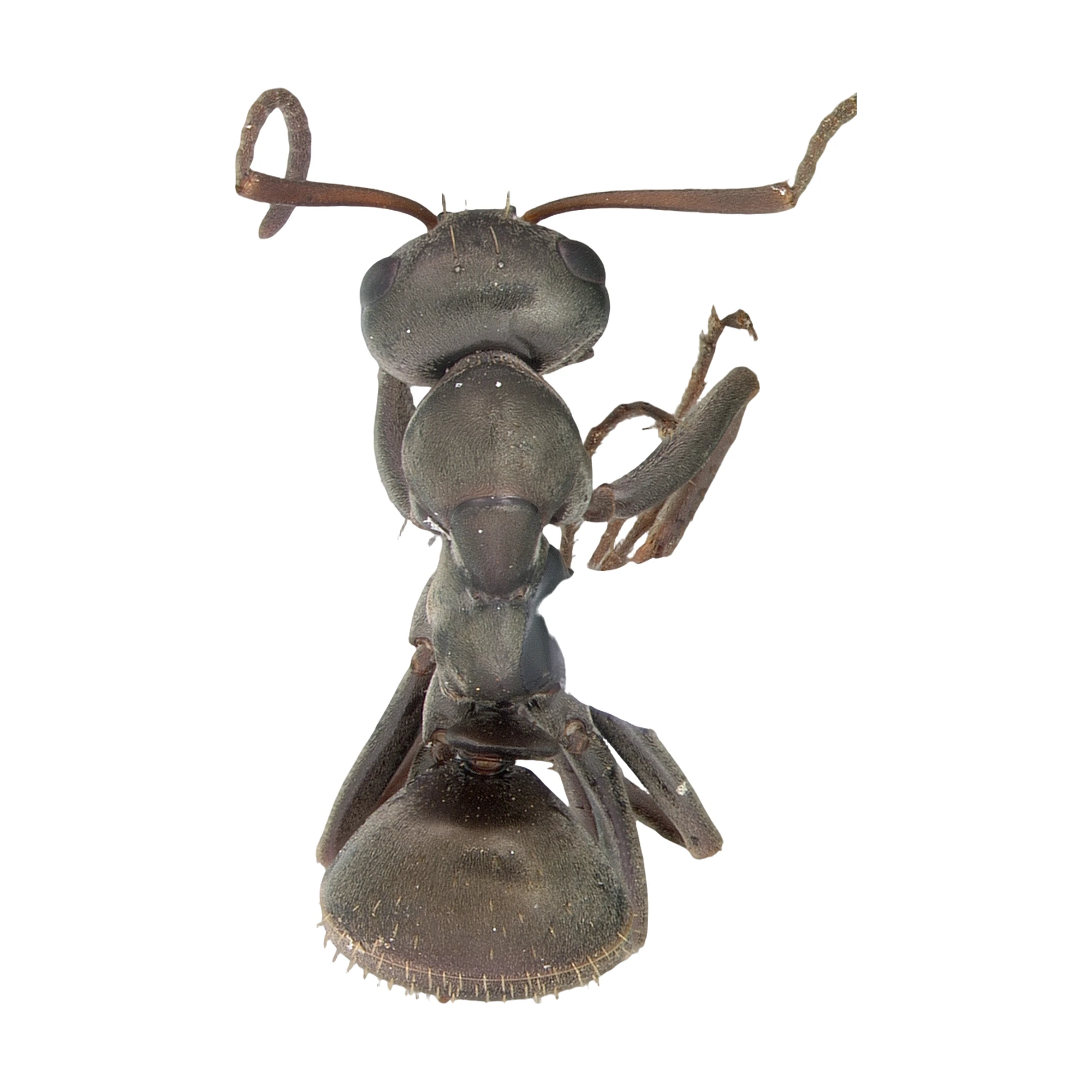
The Silky Field Ant, Formica subsericea, is a large black field ant in the family Formicidae and the Formica fusca group. Workers are about 6 to 6.5 mm long, queens about 8 to 10 mm and winged males about 10 mm. The body is blackish with brownish legs and antennae, and fine, dense hairs give it a subtle silky or velvety sheen, which is where the species name subsericea (“somewhat silky”) comes from. It has a single node at the waist, long antennae without a club, large eyes, and a rounded rear edge to the head. In the hand it can be told from similar black Formica species by its antennal scape, which is longer than its head.
This is the most abundant and widely distributed black Formica in North America east of the Rocky Mountains. It is found across southern Canada and the eastern and central United States, from New England to the southeastern states, and west onto the Great Plains, where records thin out toward the Dakotas and southeastern Montana. It lives in open forests, forest edges, grasslands, brushy fields and suburban yards. Colonies nest in the soil, often under a flat, low mound of excavated earth that can become quite large.
Silky Field Ants are fast and timid. Workers do not sting, and when a nest is disturbed they scatter quickly rather than fight. Like other ants in the subfamily Formicinae, they can spray formic acid from an opening at the tip of the abdomen to defend themselves. Workers forage for small insects and other food and tend aphids for their sugary honeydew. This species is one of the most important hosts for slave-making ants: Polyergus amazon ants and red Formica species such as Formica pergandei raid its nests and carry off pupae to raise as workers in their own colonies. Queens of some other Formica species, including Formica dakotensis, also take over its colonies as temporary parasites.
Like all ants, Formica subsericea goes through complete metamorphosis (egg, larva, pupa, adult). Workers care for the eggs and larvae, and the larvae pupate inside silk cocoons. Winged queens and males leave the nest on mating flights, usually in July or August. After mating, a queen sheds her wings and starts a new colony in the soil, rearing her first workers herself. Colonies grow over several years before they produce new winged queens and males.
Silky Field Ants are not considered pests. They do not sting, rarely bother people, and their soil nests are usually only a minor nuisance in lawns. They are useful predators and scavengers of small insects and play an important role in their ecosystems as hosts for slave-making ants and as food for other animals.
This preserved specimen educates on common field ants and their surprising role as hosts for slave-making ants, suitable for displays or studies. Check it out on BugGuide! https://bugguide.net/node/view/243156
Only logged in customers who have purchased this product may leave a review.
Reviews
There are no reviews yet.