Scarabs roll dung balls like tiny chefs, burying them to feed their larvae gourmet poo feasts.

Scarabs roll dung balls like tiny chefs, burying them to feed their larvae gourmet poo feasts.
$3.00
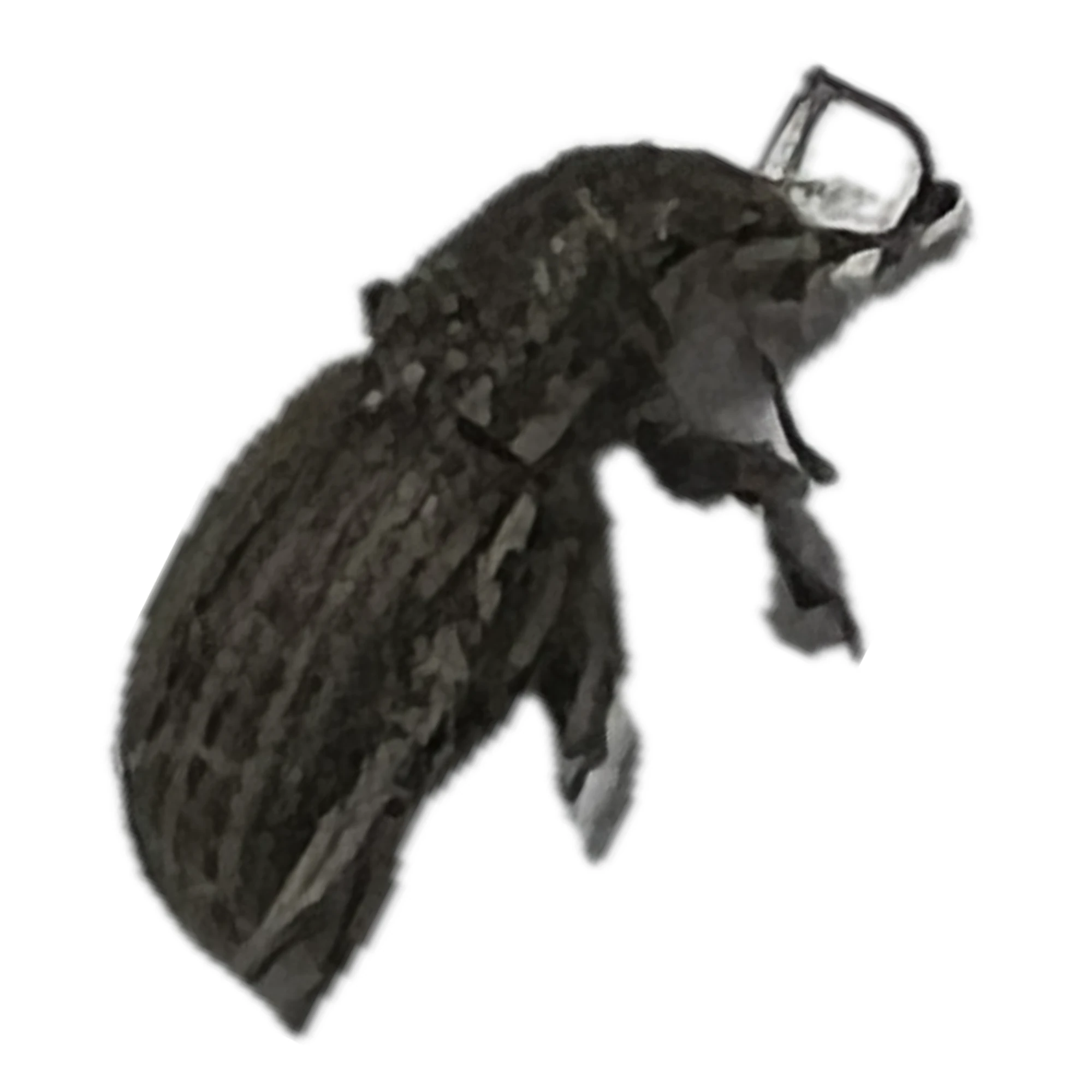
The White-fringed Weevil, belonging to the genus Naupactus in the Curculionidae family, is a compact snout beetle measuring 6 to 12 mm in length. Its body appears grayish-brown with a curved snout typical of weevils, and the most striking feature is the white fringe of scales along the edges of the elytra and legs, giving the genus its common name. Elytra are rounded and pubescent, often with subtle mottling that aids camouflage on soil or foliage. Antennae are elbowed and compact, fitting into grooves on the snout. Sexual dimorphism is minimal, though females may be slightly larger for egg production. This neotropical genus shows variation across species, but the white fringes remain a key identifier, distinguishing it from native US weevils like those in the Anthonomus group.
Native to the Neotropics with the highest species diversity in Brazil, Naupactus has become adventive across much of the United States through agricultural trade. Four introduced species infest southern and southeastern states, thriving in warm, humid agricultural fields, pastures, and disturbed soils. They prefer lowland areas where host crops grow, from Florida to Texas and northward to the Carolinas, often in monoculture farms that facilitate spread.
Adults are nocturnal feeders, emerging at dusk to chew semi-circular notches in leaves of host plants, causing economic damage. Preferred hosts include beans, cotton, cowpeas, okra, peanuts, peas, soybeans, sweetpotatoes, and velvet beans, making them significant pests in row crops. They aggregate on plants during feeding bouts and can fly short distances for dispersal. Larvae develop underground, but adult activity peaks in warmer months, with low populations in cooler seasons.
The life cycle follows typical weevil holometaboly, though specifics vary by species. Females lay eggs in soil near host roots in late summer. Eggs hatch into legless, C-shaped larvae that feed on plant roots, potentially girdling stems and causing wilting. Larvae pupate in earthen cells after several instars, overwintering as pupae or adults in mild climates. New adults emerge in spring to feed and reproduce, completing one to two generations annually in the US. This cycle aligns with crop seasons, amplifying pest impacts.
This preserved specimen illustrates invasive weevil biology, useful for agricultural education or pest management displays. Check it out on BugGuide! https://bugguide.net/node/view/30841
 <—
<—