Appearance
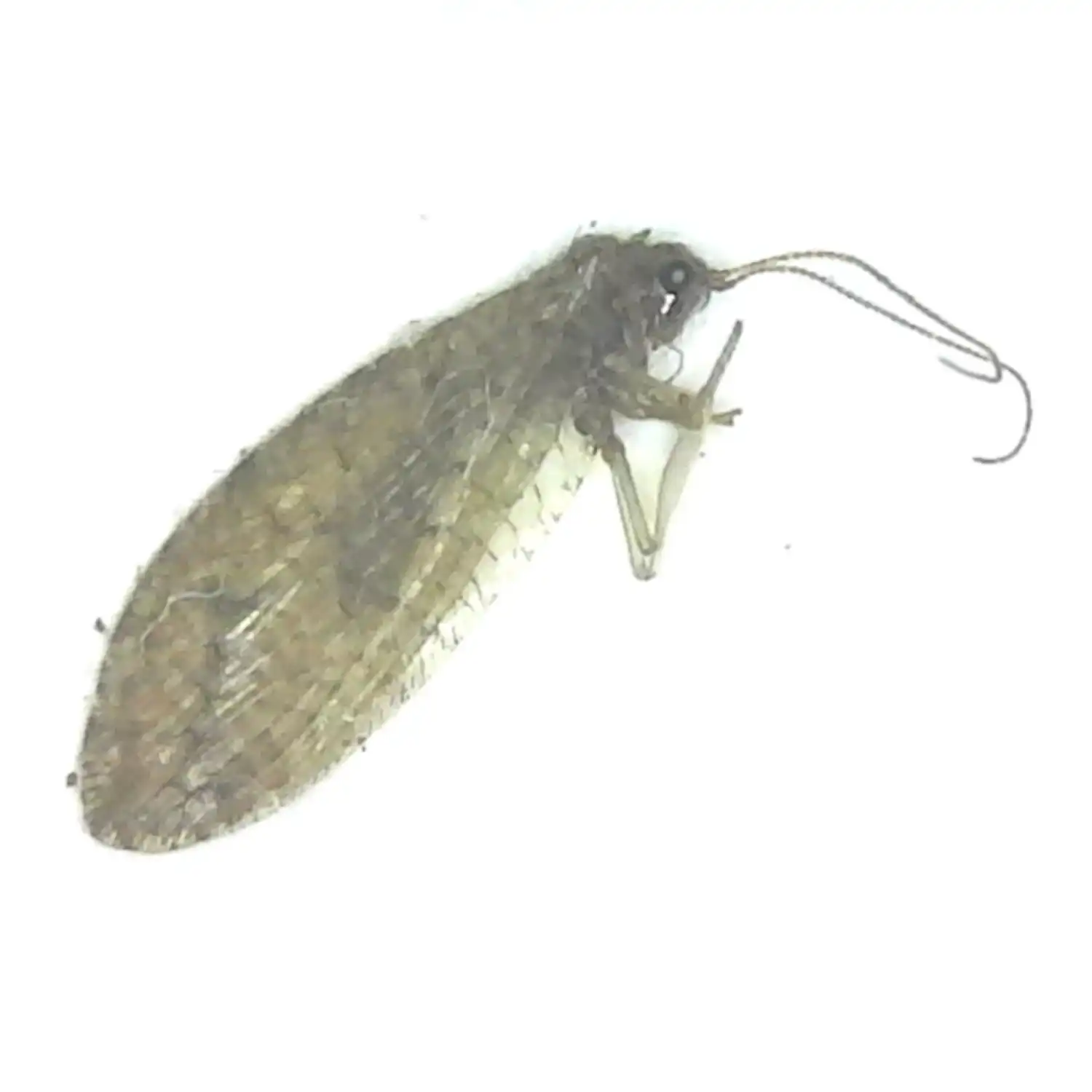
Brown Lacewings grow to 6-15 mm in size. They appear generally brown, though some species show yellow, green, or black hues. Wings look more rounded than other lacewings, with membranes extensively covered in small hairs. Veins Rs and MA partially fuse, creating multiple radial sectors unique to this family. Forewings span 4-12 mm for detailed observation.
Habitat and Range
These insects inhabit woodlands and areas with trees or shrubs. Their distribution covers worldwide regions, including throughout North America. Diversity peaks in western North America. In Canada, 36 species occur, such as 12 in Hemerobius and 11 in Wesmaelius. They adapt to various climates from spring to fall.
Behavior
Adults and larvae act as predators, favoring homopterans like aphids as prey. Larvae hunt on lichen-coated tree trunks or bare branches. They sew lichen coats using silk from Malpighian tubules, secured by spiny back bristles for camouflage. This protective behavior aids survival in exposed environments.
Life Cycle
Eggs attach directly to leaves without stalks. Larvae develop without carrying debris on their backs. Overwintering happens as larvae, pupae, or adults based on species. Generations per year vary with climate and location. The cycle aligns with seasonal prey availability in temperate zones.
Economic Impact
Brown Lacewings serve as beneficial predators in agriculture and gardens. They control aphid populations naturally, reducing pest damage without chemicals. No pest status exists; instead, they support integrated pest management. Parasitoid wasps occasionally prey on their larvae, but this does not diminish overall value.
This preserved specimen highlights the unique fused wing veins, ideal for neuropteran education and collections. Check it out on BugGuide! https://bugguide.net/node/view/3577

 <—
<—