Appearance
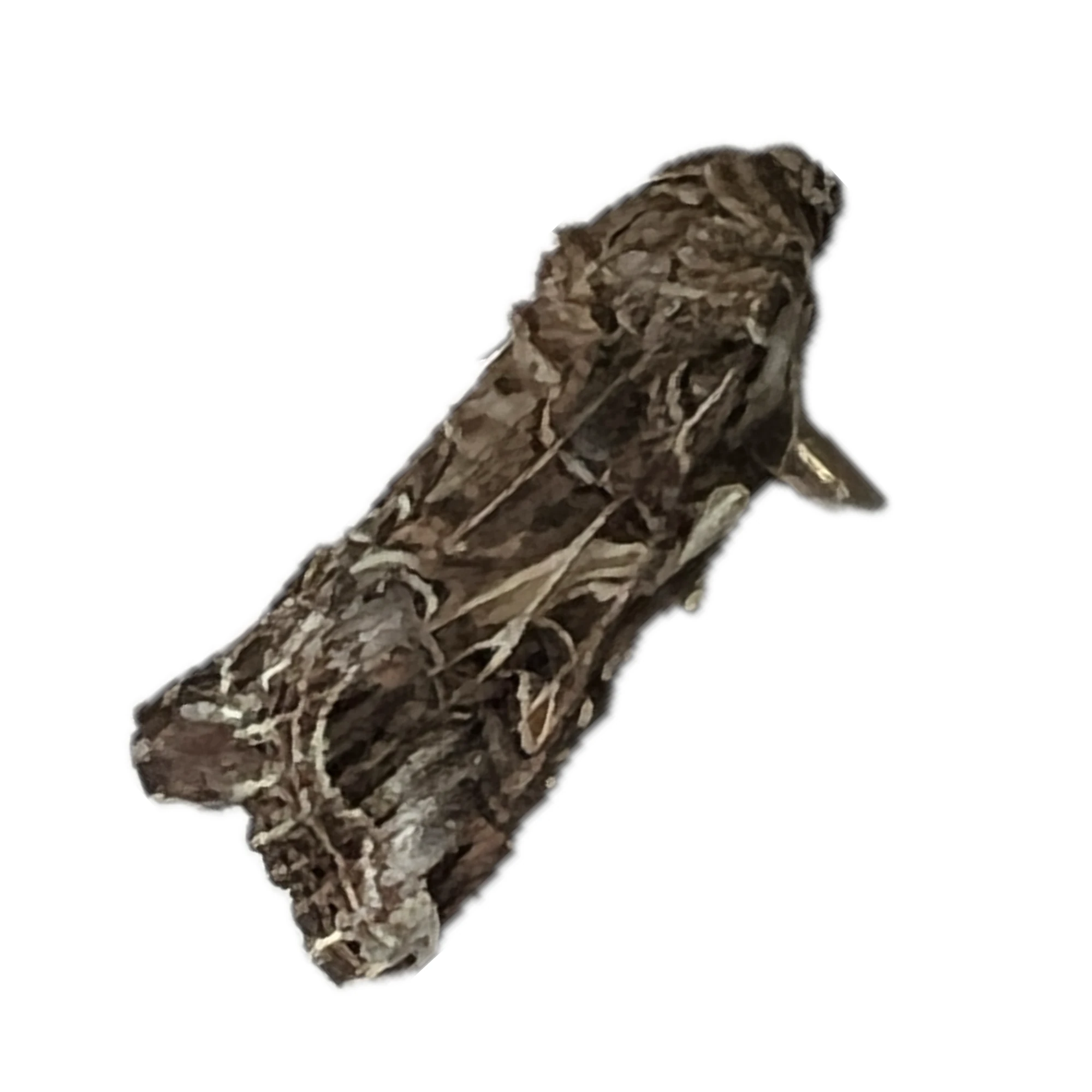
The adult Yellow-striped Armyworm Moth spans 32-44 mm in wingspan. Forewings appear brown with bluish-brown shading inside the antemedial line and near the apex. An oblique yellowish shade crosses from the orbicular spot to the postmedial line. A white mark below the reniform spot forks into a sideways Y shape. The lower median area shows dark gray, or orangish-yellow in form flavimedia. Hindwings stay translucent white with blackish veins and a terminal line. Larvae grow to 45 mm, smooth-skinned, pale gray to black. Each side bears a yellowish-orange stripe. Two black triangular spots top most segments. The head capsule looks brown with black markings and a white inverted V shape.
Habitat and Range
This moth ranges from California to Colorado and Florida, covering all eastern United States and southeastern Canada. It extends to the West Indies and from Mexico to Brazil. Habitats center on herbaceous plants and crop fields, where larvae feed actively.
Behavior
Larvae consume many herbaceous plants, boring into stems and leaves. Adults emerge to mate and lay eggs on host vegetation. Reports peak from March to November, with year-round presence in Florida and Texas. Nocturnal flight aids dispersal across agricultural areas.
Life Cycle
The species overwinters as pupae in soil. Adults emerge in early April through May. Eggs hatch in about six days. Larvae feed for three weeks, reaching the sixth instar before burrowing to pupate. Moths emerge in two weeks. The full cycle spans four to six weeks, yielding three to four generations yearly.
Economic Impact
Known as the Yellow-striped Armyworm or Cotton Cutworm, larvae damage crops like alfalfa, corn, cotton, and tomatoes by defoliation and boring. This pest status causes significant losses in agriculture, prompting scouting and insecticides for control in affected regions.
This preserved specimen highlights the distinctive Y-shaped wing mark, ideal for pest education and entomology displays. Check it out on BugGuide! https://bugguide.net/node/view/12522

 <—
<—