Appearance
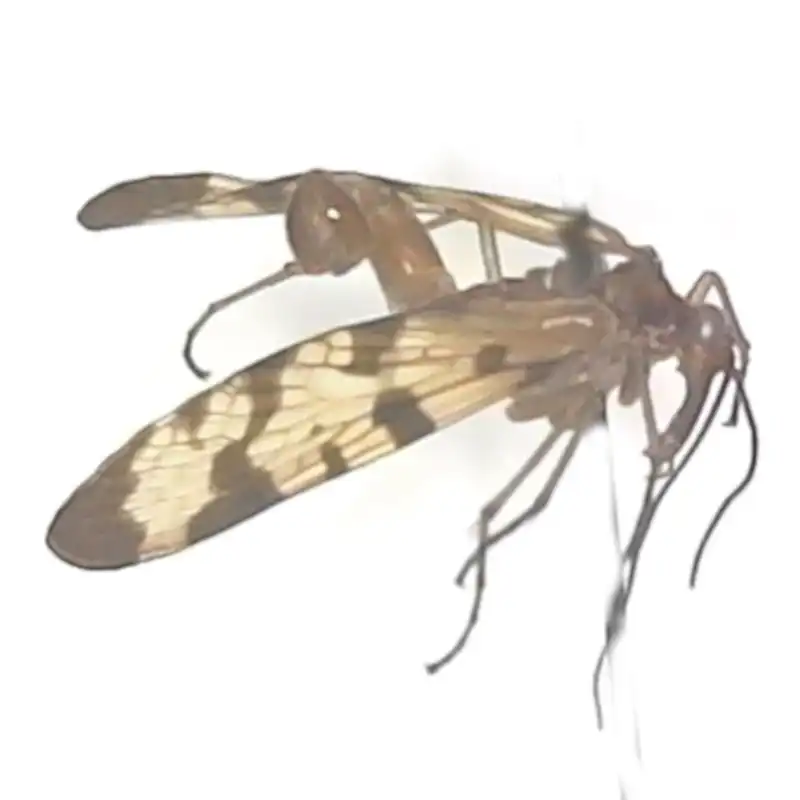
Scorpionflies reach 10-25 mm in length with slender bodies and narrow, spotted wings often held roof-like at rest. Males feature an enlarged, upturned genital bulb resembling a scorpion tail, though harmless. Females lack this structure. Antennae stay long and filiform. Coloration varies from yellowish to dark brown with black markings. Larvae appear caterpillar-like with prominent prolegs.
Habitat and Range
This family inhabits moist woodlands, stream edges, and shaded meadows with leaf litter. The range covers much of North America, especially eastern and central regions with dense vegetation. Adults appear in spring through fall, peaking in summer when moisture supports their lifestyle.
Behavior
Adults scavenge dead insects, carrion, and occasionally nectar or fruit. Males offer nuptial gifts of dead prey to females during courtship. They fly weakly and perch on low vegetation. Larvae dwell in soil, feeding on decaying organic matter. The scorpion-like tail in males serves reproductive purposes only.
Life Cycle
Females lay eggs in soil or leaf litter. Larvae develop through four instars, feeding on detritus over months. Pupation occurs in earthen cells. Adults emerge in warmer seasons to mate, with males using gifts to attract partners. One generation per year dominates in temperate zones.
Economic Impact
Neutral overall, scorpionflies contribute to decomposition by scavenging and larval detritivory. They pose no harm to crops or humans. Their presence indicates healthy moist ecosystems without economic costs or benefits.
This preserved specimen highlights the distinctive male genital bulb, ideal for mecopteran education and displays. Check it out on BugGuide! https://bugguide.net/node/view/9216

 <—
<—