Search for a bug

Polyphemus Moth (Antheraea polyphemus), Damaged

$7.95

  • bugguide info... <–
    See it in BugGuide
  • Antheraea polyphemus
  • size wingspan 100-150 mm
  • DAMAGED SPECIMEN
  • Damaged specimen: may have a detached or missing antenna, a smudge or chip in a wing, or similar flaws
  • ALL OUR INSECTS ARE DEAD UNMOUNTED SPECIMENS
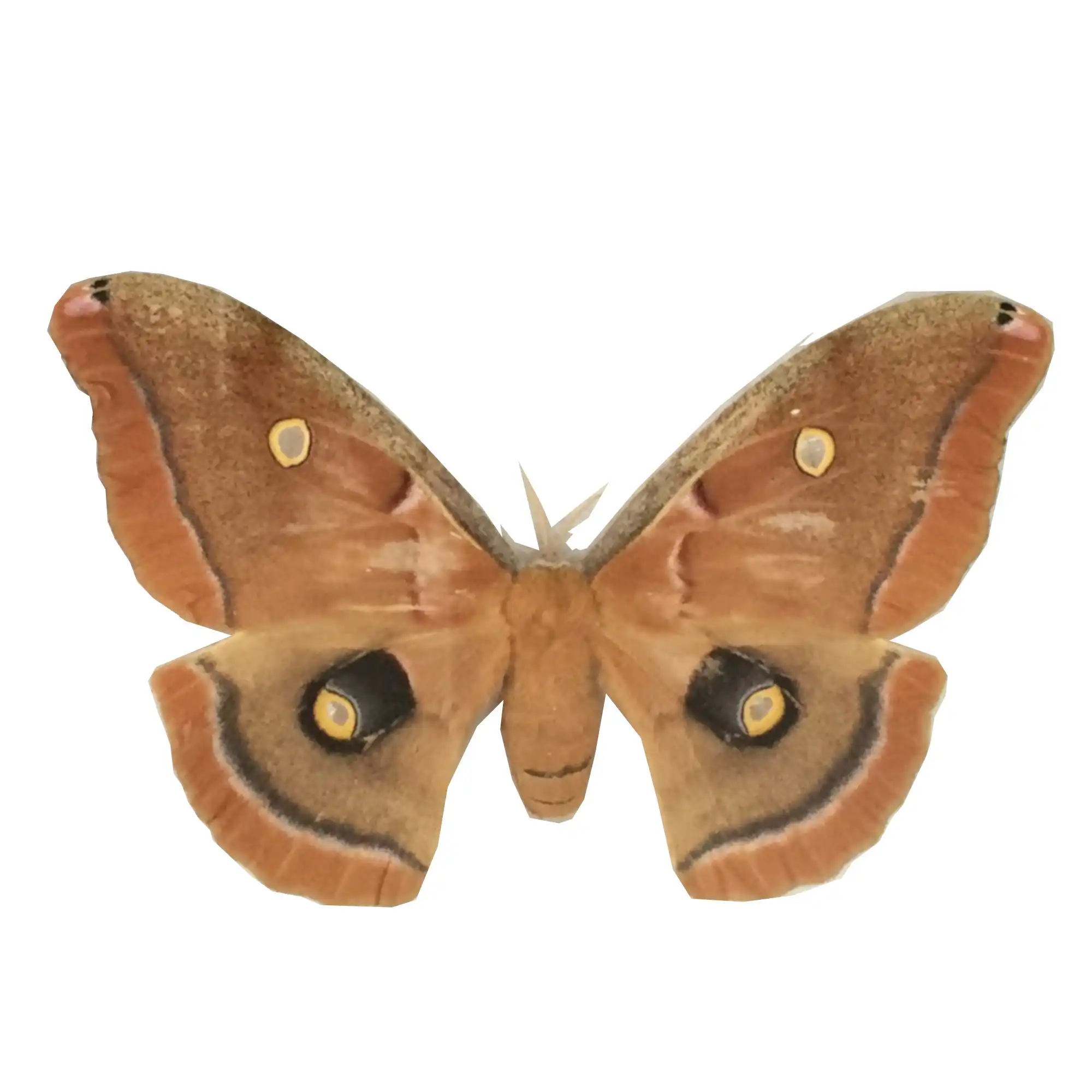
  • The photo is a representative example of the specimens we have in stock.

4 in stock

Appearance

The Polyphemus Moth is a large tan to brown silk moth with a wingspan of 100 to 150 mm (about 10 to 15 cm). Each hindwing has a large yellow to purplish eyespot ringed in blue and black. The moth is named for the one-eyed cyclops Polyphemus of Greek myth because of those eyespots.

Habitat and Range

This moth lives in deciduous hardwood forests, orchards, urban areas, and wetlands. It is widespread in North America, from southern Canada through most of the United States. Our specimens were collected in Douglas County, Wisconsin.

Behavior

Adult Polyphemus Moths do not eat. They live only about a week, and their only objective is to reproduce. They are nocturnal and are easily attracted to lights at night. The large hindwing eyespots can startle or distract predators.

Life Cycle

Two broods generally occur each year in much of the United States, one in early spring and one in late summer. Females lay eggs on the leaves of many host trees, including elm, birch, willow, oak, maple, hickory, and walnut. The bright green caterpillars feed heavily, then spin brown silk cocoons, often wrapped in a leaf. The adult moth is the stage shown in the photo.

Economic Impact

This species is not considered a pest. It is a popular, showy native moth valued by collectors, educators, and nature enthusiasts.

Taxonomy Note

Hodges number 7757. The species was described by Cramer in 1776 and belongs to the giant silkworm and royal moth family Saturniidae, subfamily Saturniinae.

Check it out on BugGuide! https://bugguide.net/node/view/427/bgimage

Description

Appearance

The Polyphemus Moth is a large tan to brown silk moth with a wingspan of 100 to 150 mm (about 10 to 15 cm). Each hindwing has a large yellow to purplish eyespot ringed in blue and black. The moth is named for the one-eyed cyclops Polyphemus of Greek myth because of those eyespots.

Habitat and Range

This moth lives in deciduous hardwood forests, orchards, urban areas, and wetlands. It is widespread in North America, from southern Canada through most of the United States. Our specimens were collected in Douglas County, Wisconsin.

Behavior

Adult Polyphemus Moths do not eat. They live only about a week, and their only objective is to reproduce. They are nocturnal and are easily attracted to lights at night. The large hindwing eyespots can startle or distract predators.

Life Cycle

Two broods generally occur each year in much of the United States, one in early spring and one in late summer. Females lay eggs on the leaves of many host trees, including elm, birch, willow, oak, maple, hickory, and walnut. The bright green caterpillars feed heavily, then spin brown silk cocoons, often wrapped in a leaf. The adult moth is the stage shown in the photo.

Economic Impact

This species is not considered a pest. It is a popular, showy native moth valued by collectors, educators, and nature enthusiasts.

Taxonomy Note

Hodges number 7757. The species was described by Cramer in 1776 and belongs to the giant silkworm and royal moth family Saturniidae, subfamily Saturniinae.

Check it out on BugGuide! https://bugguide.net/node/view/427/bgimage

Additional information

Weight 0.01 lbs

Reviews

There are no reviews yet.

Only logged in customers who have purchased this product may leave a review.