
$7.95
 <—
1 in stock
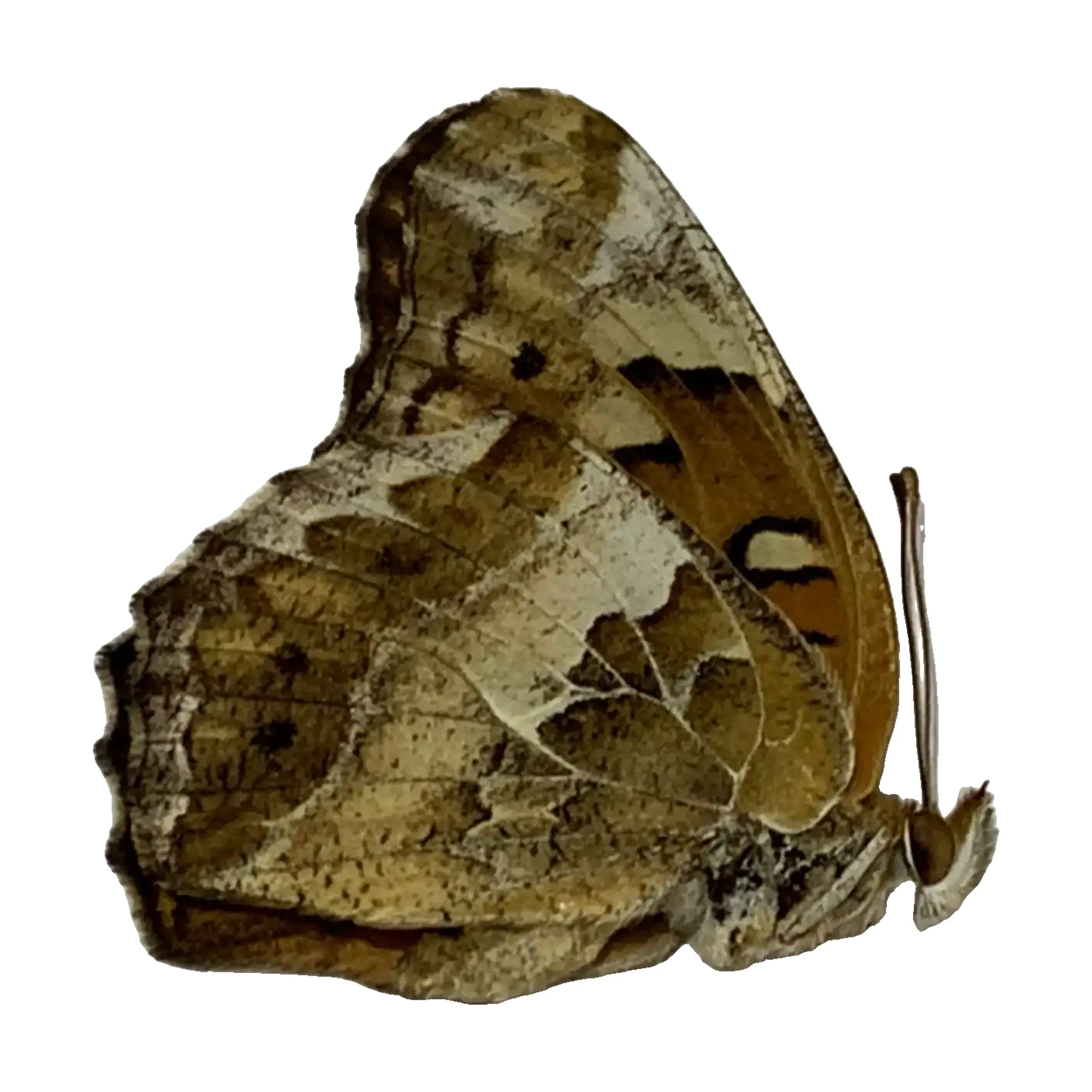
The Variegated Fritillary, Euptoieta claudia, is a medium-sized, orange-brown butterfly with a wingspan of about 44 to 57 mm (1.75 to 2.25 inches). It is smaller than the greater fritillaries and closer in size to a buckeye. The upperside is orange checkered with black, with a row of black spots near the wing edge and black lines across the middle of the wings. The underside, which is what you see in the photo, is different. The forewing is orange with a pale spot rimmed in black in the middle of the wing. The hindwing is mottled with browns, grays, and tan, with a pale band across it and a few dark spots, and the edge is slightly scalloped. There are no silver spots, which separates it from the greater fritillaries. With its wings closed it looks like a dried leaf.
The Variegated Fritillary lives in open, sunny places such as fields, pastures, roadsides, clover and alfalfa fields, mountain meadows, and flower gardens. It ranges from southern Canada south through Central America to Colombia. It is a permanent resident south of about 35 degrees north latitude, and each year it spreads north, often into southern Canada. It cannot survive freezing weather, so the northern populations die out each fall. It is on the South Dakota Game, Fish and Parks butterfly checklist. Some of our specimens were collected near Hot Springs, South Dakota.
This butterfly flies low and fast, and it is hard to approach, even when it is resting or feeding. Its genus name, Euptoieta, comes from a Greek word meaning “easily scared.” Males patrol just above the ground much of the day looking for females. Adults visit flowers for nectar, especially thistles, yellow composites, milkweed, dogbane, asters, and clover, and they also gather at damp ground. It is a highly migratory butterfly that moves north through the summer and south in the fall.
Complete metamorphosis (egg, larva, pupa, adult), with two or three generations a year in the north and four or more overlapping generations in the south. The female lays pale green or cream eggs one at a time on the leaves and stems of the host plant. The caterpillars are orange-red with white-striped sides, black spines, and a pair of long black-tipped horns on the head end. They eat violets and pansies, passionflowers, flax, plantain, moonseed, mayapple, and a number of other plants. The chrysalis is mostly shiny white with small black spots and gold and orange bumps. It overwinters only in the southern states, mainly as caterpillars, and adults fly north again each spring and summer.
The Variegated Fritillary is a minor garden pest. Its caterpillars, called pansy worms, chew the leaves, flowers, and sometimes the stems of pansies and violets, and they also feed on passionflower. They have been reported on fall pansy crops in greenhouses, and Bt (Bacillus thuringiensis) is recommended against young caterpillars. It is not a pest of any major crop, and the species is considered secure. Gardeners who plant violets or passionflower vines to support butterflies attract it on purpose.
This preserved specimen educates on butterfly migration and fritillary identification, suitable for displays or studies. Check it out on BugGuide! https://bugguide.net/node/view/400
| Weight | 0.01 lbs |
|---|
Only logged in customers who have purchased this product may leave a review.
Reviews
There are no reviews yet.