Short Description
The Yellow Collared Scape Moth (Cisseps fulvicollis) has a 30-37 mm wingspan with dark brown forewings and an orange collar. Adults visit flowers for nectar; larvae feed on grasses and lichens. (26 words) Learn more: https://bugguide.net/node/view/447
Long Description
Appearance
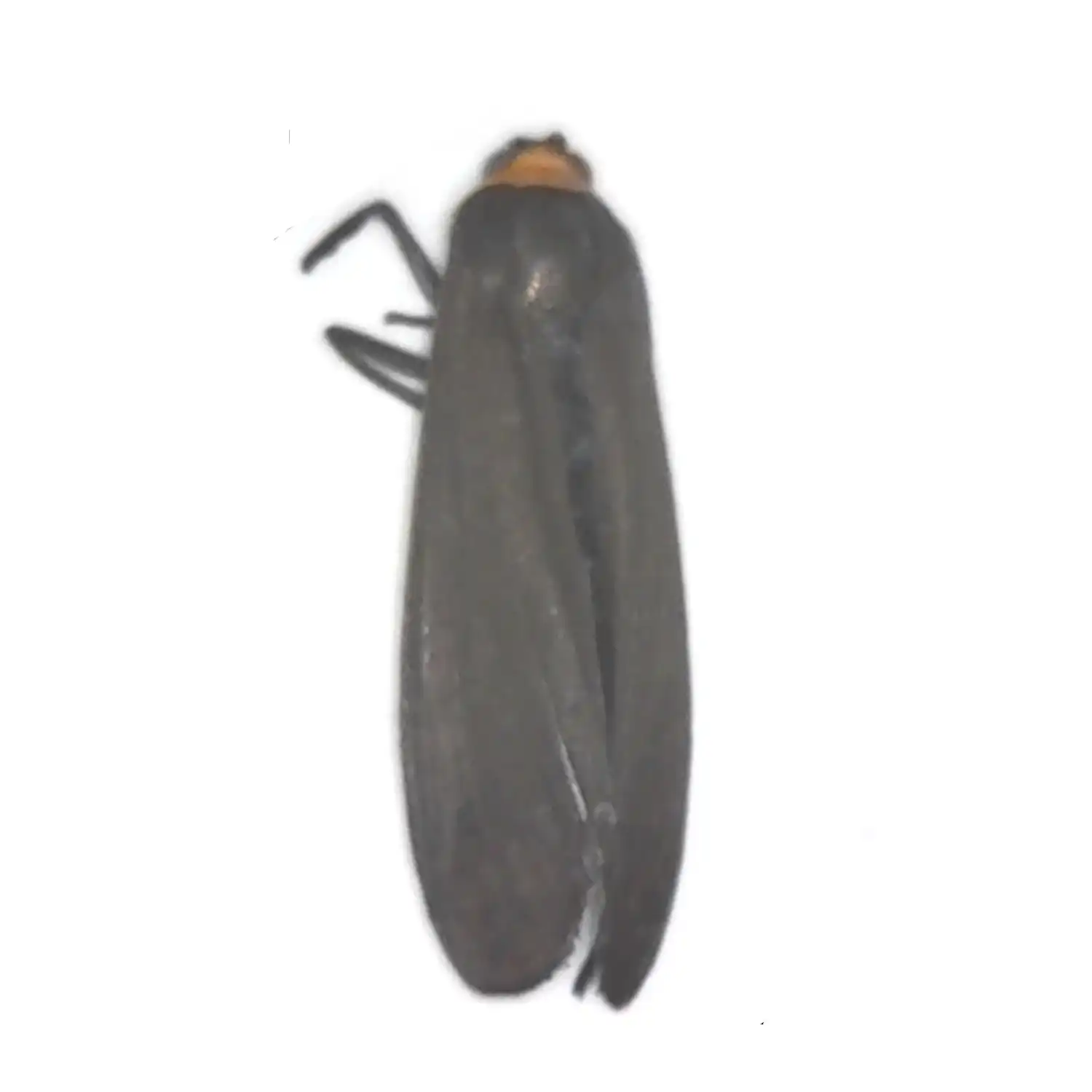
The Yellow Collared Scape Moth spans 30 to 37 mm in wingspan. Forewings appear dark brown or black. The collar shows orange, occasionally yellow. The thorax remains black, and the abdomen often displays blue iridescence. Antennae stay pectinate. Hindwings feature a large translucent patch that looks pale grayish, bluish, or white based on light. Larvae turn hairy, whitish or pale yellow, with tufts of long hair from oval spots. Hairs near the head project forward, usually blackish. The head ranges yellow to brownish-orange with black spots.
Habitat and Range
This moth inhabits fields rich with flowers across the United States and Canada. Adults commonly appear in open areas where nectar sources abound. The broad North American presence includes diverse regions, though specifics vary by local flora.
Behavior
Adults fly from May to October or until the first hard frost. They remain active at night, attracted to lights, and sip nectar from goldenrod and other flowers. Larvae consume grasses, lichens, and spike-rushes like Eleocharis species. The species mimics wasps or distasteful beetles for protection, possibly gaining chemical defenses from pyrrolizidine alkaloids in host plants.
Life Cycle
The cycle includes eggs, caterpillars, cocoons, pupae, and adults. Females lay eggs on suitable hosts. Larvae develop through feeding stages, forming cocoons for pupation. Adults emerge to mate, with pairs observed during the season. Timing aligns with warmer months in temperate areas.
Economic Impact
Neutral to beneficial, as larvae feed on grasses and lichens without major crop damage. Adults aid pollination through flower visits. No pest status noted; they support ecosystems by controlling minor vegetation without economic costs.
This preserved specimen highlights the vibrant orange collar and translucent wings, ideal for moth collections and education. Check it out on BugGuide! https://bugguide.net/node/view/447

 <—
<—