
$3.00
 <—
3 in stock
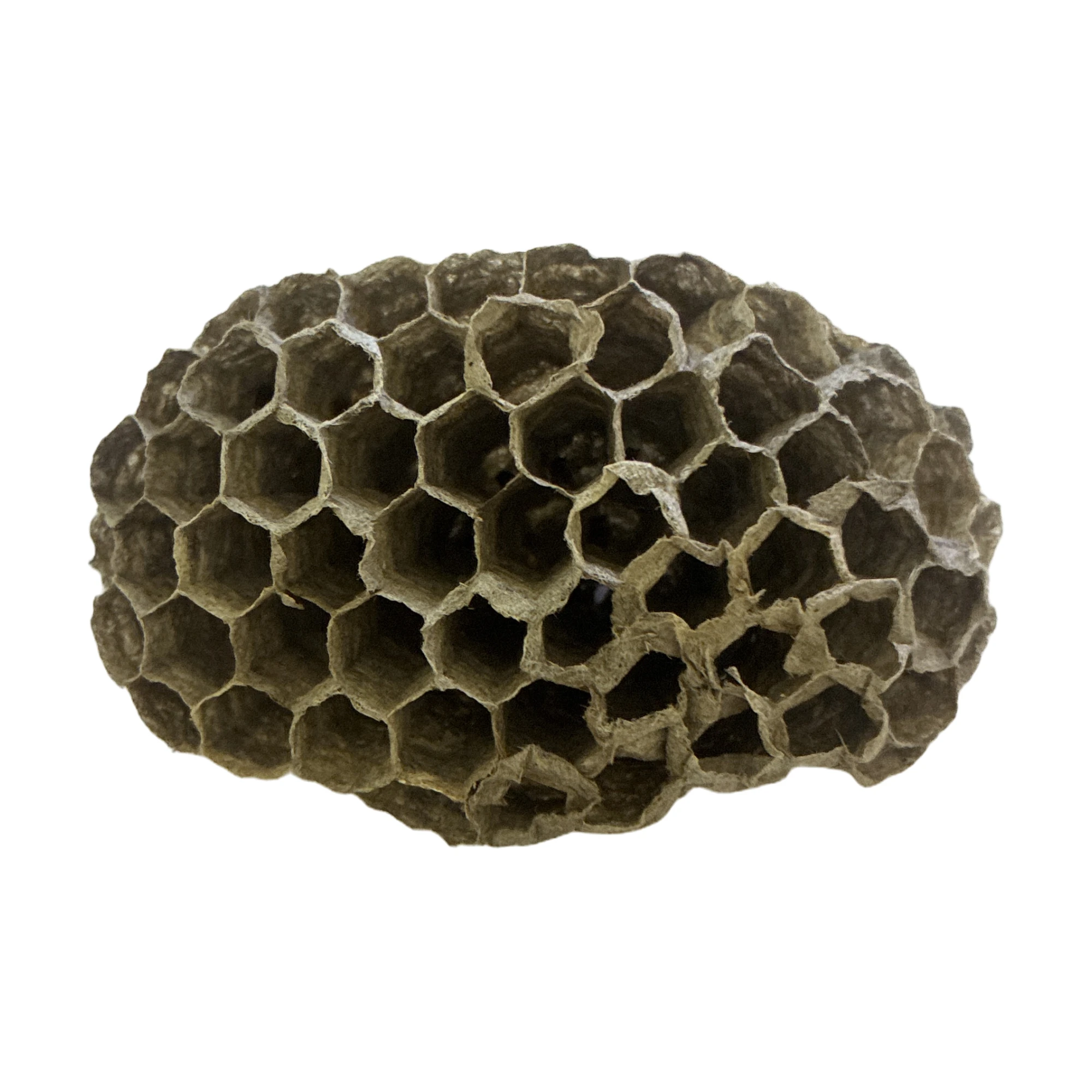
This is a small, open paper comb made by the Red Wasp, Polistes carolina. It is a single layer of six-sided cells, grayish brown to olive gray with a mottled, papery look, and the cell openings are all on one face. In nature the size of a Red Wasp nest depends on how long the colony has been growing. A founding queen starts with only 1 to 3 cells in early spring, a nest that survives the spring has roughly 15 to 30 cells and is only a few centimeters across, and a full-season nest typically reaches about 15 cm (6 inches) across, with unusually large paper wasp combs reported up to about 25 cm (10 inches). The nests we offer are about 5 to 10 cm across (2 to 4 inches), which is a partly grown to mid-sized comb. The paper is made of chewed wood fibers mixed with saliva, and it is thin and light, so handle it gently. Paper wasp combs of the genus Polistes look very much alike, so a nest cannot be identified to species from the comb alone. Our nests are identified by the Red Wasps collected from them when the nests were removed.
The Red Wasp lives in the eastern United States, from New York and Pennsylvania south to Florida and west to Illinois, Kansas, and eastern Texas. It builds in open, sheltered places, most often under the eaves and roofs of buildings and also in spots such as old tires, and the nest hangs from a single short stalk. Red Wasps sometimes nest alongside the very similar Coarse-backed Red Paper Wasp, Polistes rubiginosus, which prefers enclosed spaces such as hollow trees.
The queen starts the nest in spring by chewing wood into pulp and shaping the first few cells. Workers then add new cells, enlarging the comb as the colony grows. The cells face downward and are left open, so the wasps can reach the larvae to feed them chewed-up caterpillars and other soft prey. By the end of the season a Red Wasp nest is typically up to about 15 cm (6 inches) across, though unusually large combs can reach about 25 cm (10 inches), and a mature colony usually holds only about 20 to 30 adults. The wasps defend the nest and can sting if it is disturbed.
A mated queen spends the winter in a sheltered spot and builds the nest herself in spring, laying an egg in each cell. The eggs hatch into larvae, which are fed by the adults, and when they are ready to pupate the cells are capped with a thin layer of paper. The first workers take over building and feeding, and the colony grows through the summer. In late summer and fall it produces new queens and males, which mate, and the males die soon afterward. The old queen and the workers die as the cold arrives, the nest is abandoned, and only the young mated queens survive the winter. The nest is not reused, which is why empty nests can be collected safely in fall and winter.
The wasps that build these nests are mostly beneficial, because they kill many caterpillars and other insects in gardens and crops. Nests built close to doors, windows, and porches can be a problem, so an empty comb is a good way to see how the wasps work without the sting. This preserved nest is a good display for classrooms, insect collections, and nature tables, and it shows the cell structure and paper texture up close.
This preserved specimen educates on social wasp nest architecture and the colony life cycle, suitable for displays or studies. Check it out on BugGuide! https://bugguide.net/node/view/581
| Weight | 0.1 lbs |
|---|
Only logged in customers who have purchased this product may leave a review.
Reviews
There are no reviews yet.