Praying Mantises strike at speeds of up to 5 mph. That’s faster than the blink of an eye! They can also swivel their heads 180 degrees to scope the scene.

Praying Mantises strike at speeds of up to 5 mph. That’s faster than the blink of an eye! They can also swivel their heads 180 degrees to scope the scene.
$3.00
3 in stock
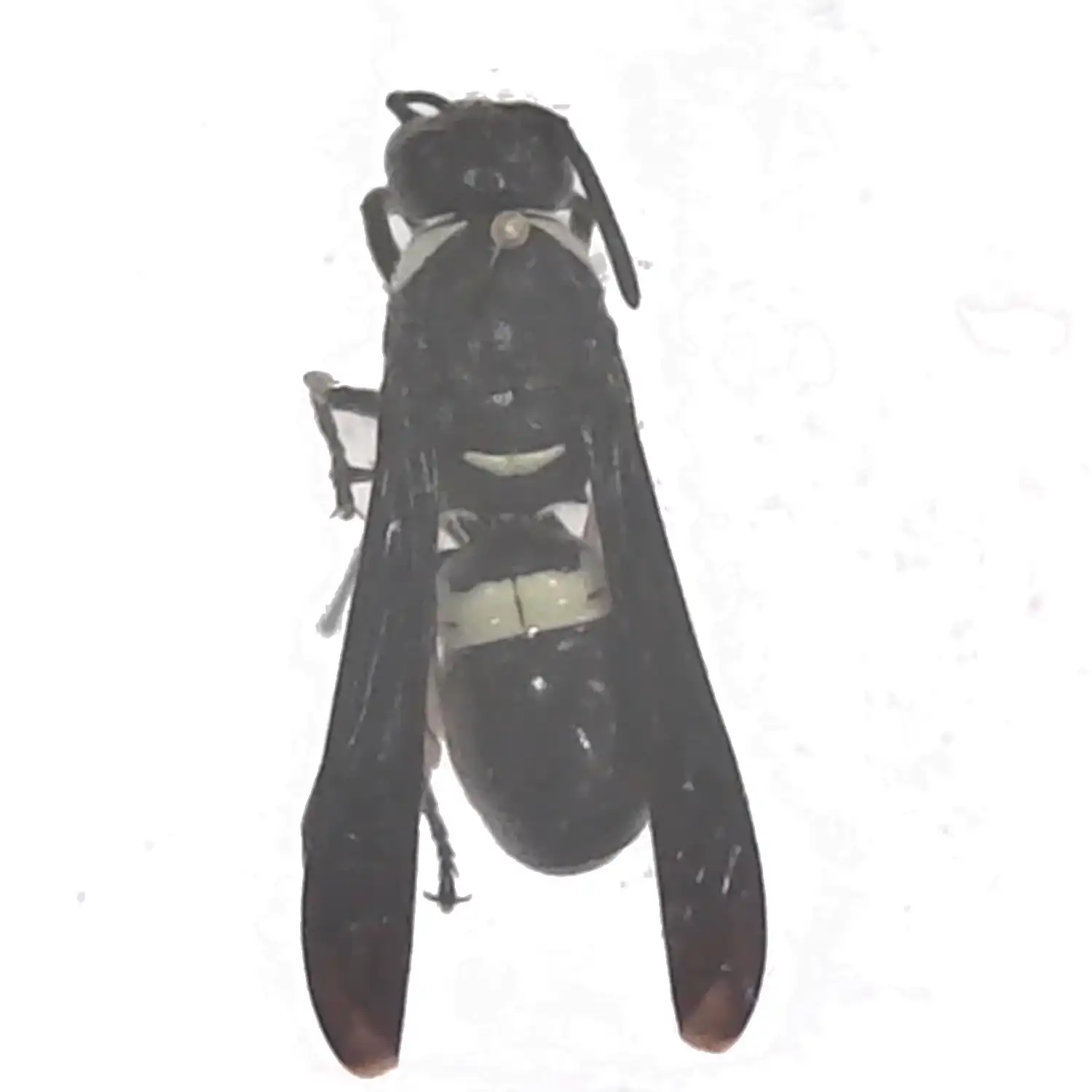
The Four-toothed Mason Wasp (Monobia quadridens) features forewing lengths of 11-18 mm with a black metasoma and broad apical white band on tergum 1. It nests in wood or dirt and provisions caterpillars for larvae. Found in eastern US. (36 words) Learn more: https://bugguide.net/node/view/5345
The Four-toothed Mason Wasp measures forewing lengths of 11.0 to 14.5 mm in males and 14 to 18 mm in females. It displays a single broad apical fascia on tergum 1 with an otherwise black metasoma. The name quadridens refers to four teeth on the abdominal band. This structure aids in identification among similar wasps.
This wasp inhabits eastern United States and southern Ontario, extending west to Wisconsin, Kansas, and New Mexico. It favors areas with wood borings or dirt banks for nesting. These environments provide suitable sites for burrow creation or takeover of abandoned nests.
Adults visit flowers to sip nectar during active periods. Females nest primarily in wood borings but sometimes burrow into dirt banks. They often appropriate abandoned carpenter bee or ground bee nests, as well as mud dauber cells. Nests get provisioned with caterpillars, and cells separate via mud partitions.
Activity peaks from May to October in regions like North Carolina. Females lay eggs in provisioned cells after stocking with paralyzed caterpillars. Larvae consume the caterpillars to develop fully. The cycle aligns with seasonal availability of prey and nesting sites.
As predators of caterpillars from families like Pyralidae, Crambidae, and Tortricidae, these wasps hold beneficial status. They help control pest populations in gardens and agriculture, reducing damage without chemical needs. No direct harm to economies noted.
This preserved specimen highlights the unique four-toothed abdominal band, ideal for wasp studies and collections. Check it out on BugGuide! https://bugguide.net/node/view/5345