
$3.00
 <—
22 in stock
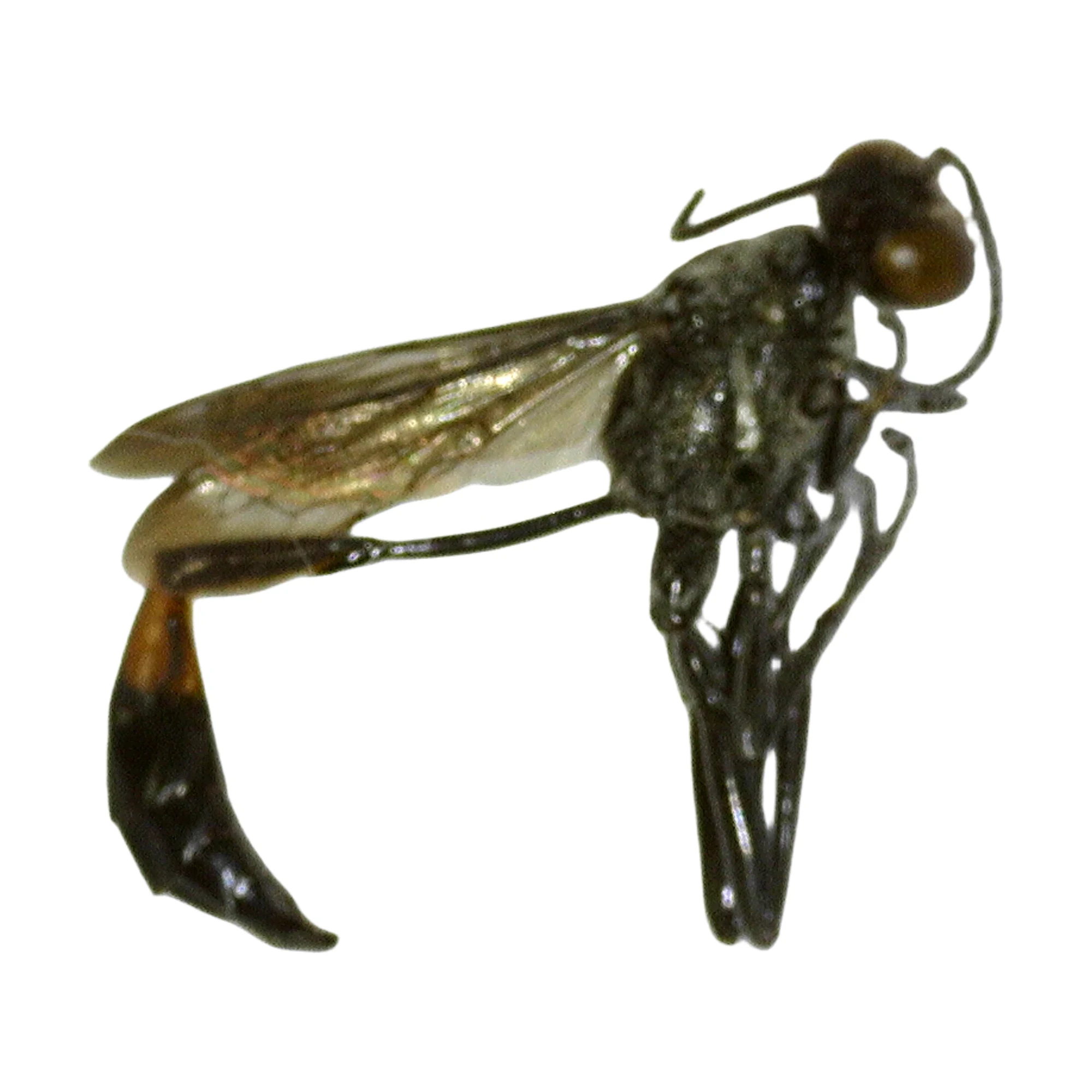
Thread-waisted wasps of the genus Ammophila, also called sand wasps, are slender, medium-sized wasps, usually 20 to 25 mm long but ranging from 11 to 38 mm depending on the species. They are generally black with some amount of orange or red on the abdomen. A very narrow, thread-like waist joins the thorax to the abdomen, which gives the family its name. In Ammophila the abdomen is straight or bent downward at the tip, never upward, which helps separate them from the similar genus Podalonia. Males are more slender than females, usually show less red, and lack the comb-like “rake” on the front feet that females use for digging. With more than 60 species in North America, they are hard to identify to species, so this listing is sold as Ammophila sp.
The genus occurs across the Northern Hemisphere and is widespread in North America, with about 240 species worldwide. Ammophila wasps are found in open, sunny places such as grasslands, sandy ground, and gravelly areas, where they need bare soil or leaf litter for nesting and flowers for nectar. Some of our specimens were collected near Hot Springs, South Dakota.
Adults are active from summer into early fall, mostly from June to October in the northern states. They fly quickly and low to the ground and are often seen flicking their wings nervously as they search. Adults drink nectar from flowers such as white sweetclover. Each female works alone: she digs a burrow in the soil, loosening the dirt by pressing her head against it and vibrating her flight muscles, and hides the entrance. She then hunts caterpillars, mostly of moths and a few skippers, and sometimes sawfly larvae, paralyzes one with her sting, and drags it back to the burrow, sometimes flying with it. In several species the female closes the nest by packing soil down with a small pebble held in her jaws, a rare example of tool use among insects. Ammophila wasps are not aggressive and sting only if mishandled.
Ammophila undergoes complete metamorphosis (egg, larva, pupa, adult). The female lays a single egg on the paralyzed caterpillar in the burrow. Depending on the species, she may provide one large caterpillar, several smaller ones, or return over several days to add more as the larva grows. The larva feeds slowly on the caterpillar, which stays alive until the end, then spins a cocoon in the burrow. In many species the larva spends the winter in its cell and emerges as an adult the following spring. In warmer regions there may be several generations a year.
Ammophila wasps are beneficial. They remove caterpillars, many of which feed on garden and crop plants, and their digging mixes and aerates the soil and lets rainwater soak in. They are not pests and are harmless unless handled roughly.
This preserved specimen educates on solitary hunting wasps and their caterpillar-provisioning nests, suitable for displays or studies. Check it out on BugGuide! https://bugguide.net/node/view/2939
| Weight | 0.01 lbs |
|---|
Only logged in customers who have purchased this product may leave a review.
Reviews
There are no reviews yet.