
$3.00

3 in stock
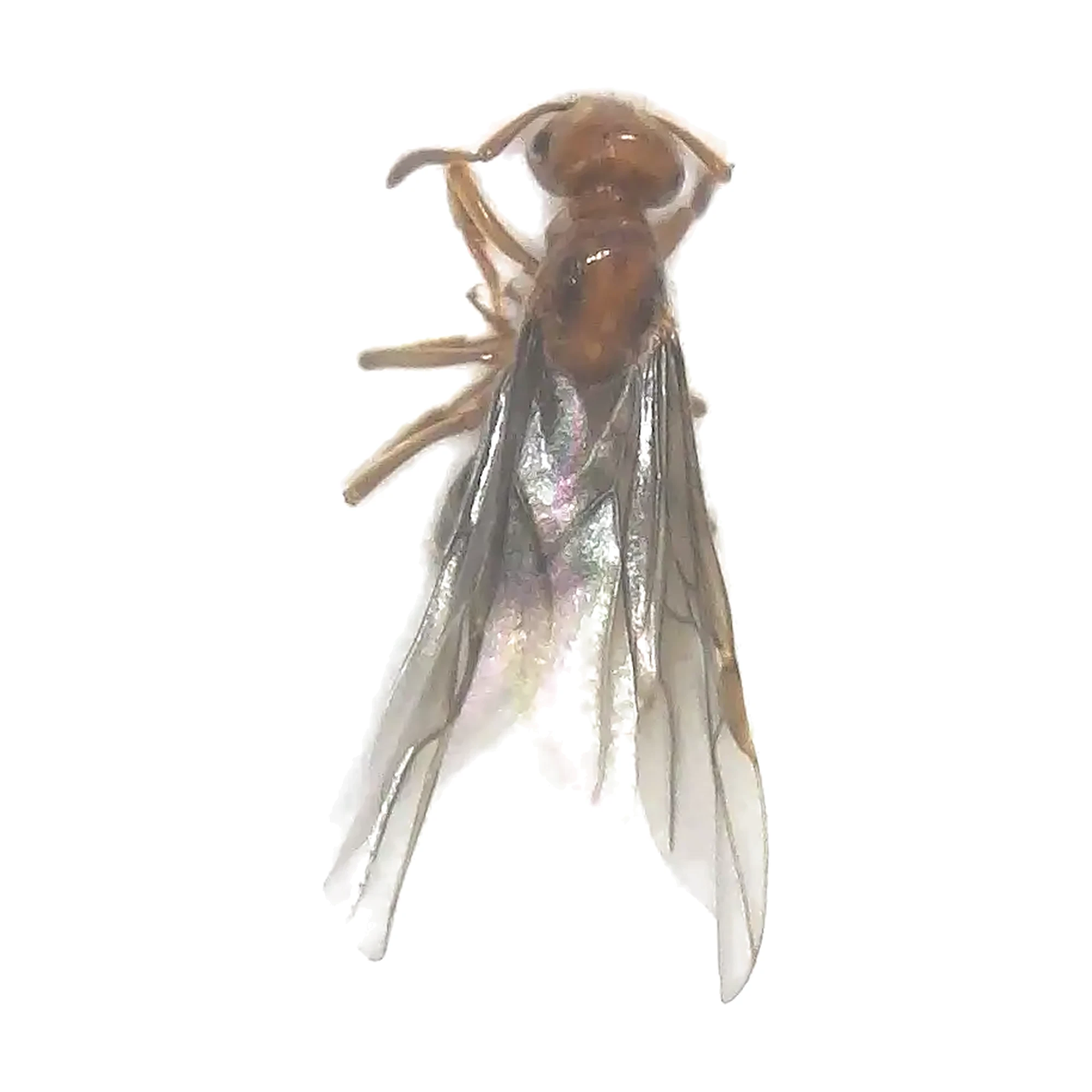
Citronella Ant queens are large for their genus, about 7 to 9 mm long, roughly twice the length of the small golden yellow workers. Queens range from light yellow to reddish yellow or light brown, often with a darker abdomen. Winged queens have smoky brown wings, and queens that have mated shed their wings, leaving small stubs on the thorax. Like the workers, they have a single-segmented waist with a thin, upright scale, small eyes and no stinger. These are real, US-collected Citronella Ant queens from Hancock County, Indiana.
Citronella Ants belong to a group of Lasius species (the claviger group, once called Acanthomyops) that is found only in North America. They are widespread and common in the eastern and central United States, including Indiana, but are seldom noticed because they live almost entirely underground. Colonies nest in soil under stones and logs, in rotting stumps, in lawns and woodland edges, and often along house foundations and under concrete slabs.
These ants get their name from the strong lemon or citronella smell they give off when disturbed or crushed. The scent comes from chemicals made in glands in the head and is used as an alarm and defense signal. Workers rarely come above ground. Instead, they tend root-feeding aphids and mealybugs in underground chambers and live mostly on the sugary honeydew these insects produce. Citronella Ants are not aggressive and cannot sting. Large numbers of winged queens and males pour out of the nest on mating flights, sometimes from cracks in basements and slabs, and are often mistaken for swarming termites.
Like all ants, Citronella Ants go through complete metamorphosis (egg, larva, pupa, adult). Mating flights happen from late spring into fall depending on the species, and sometimes indoors in winter from nests under heated buildings. After mating, the queen sheds her wings. She cannot start a colony on her own. Instead, she is a temporary social parasite. She enters a nest of another Lasius species, such as a cornfield ant, where the resident queen is killed and the host workers raise her first brood. As the host workers die off, the colony becomes made up entirely of Citronella Ants. Some queens spend the winter under stones or logs and look for a host colony in spring.
Citronella Ants are harmless nuisance ants. They do not damage wood, sting or eat stored food. Their main impact is the alarm they cause when swarms appear indoors and are confused with termites. Ants can be told apart by their elbowed antennae, narrow waist and front wings that are longer than the hind wings. Outdoors, their tunneling helps loosen and aerate the soil.
This preserved specimen educates on the lemon-scented, underground-living ants of North America and their unusual parasitic way of starting new colonies, suitable for displays or studies. Check it out on BugGuide! https://bugguide.net/node/view/234431
| Weight | 0.01 lbs |
|---|
Only logged in customers who have purchased this product may leave a review.
Reviews
There are no reviews yet.