
$3.00
 <---
5 in stock
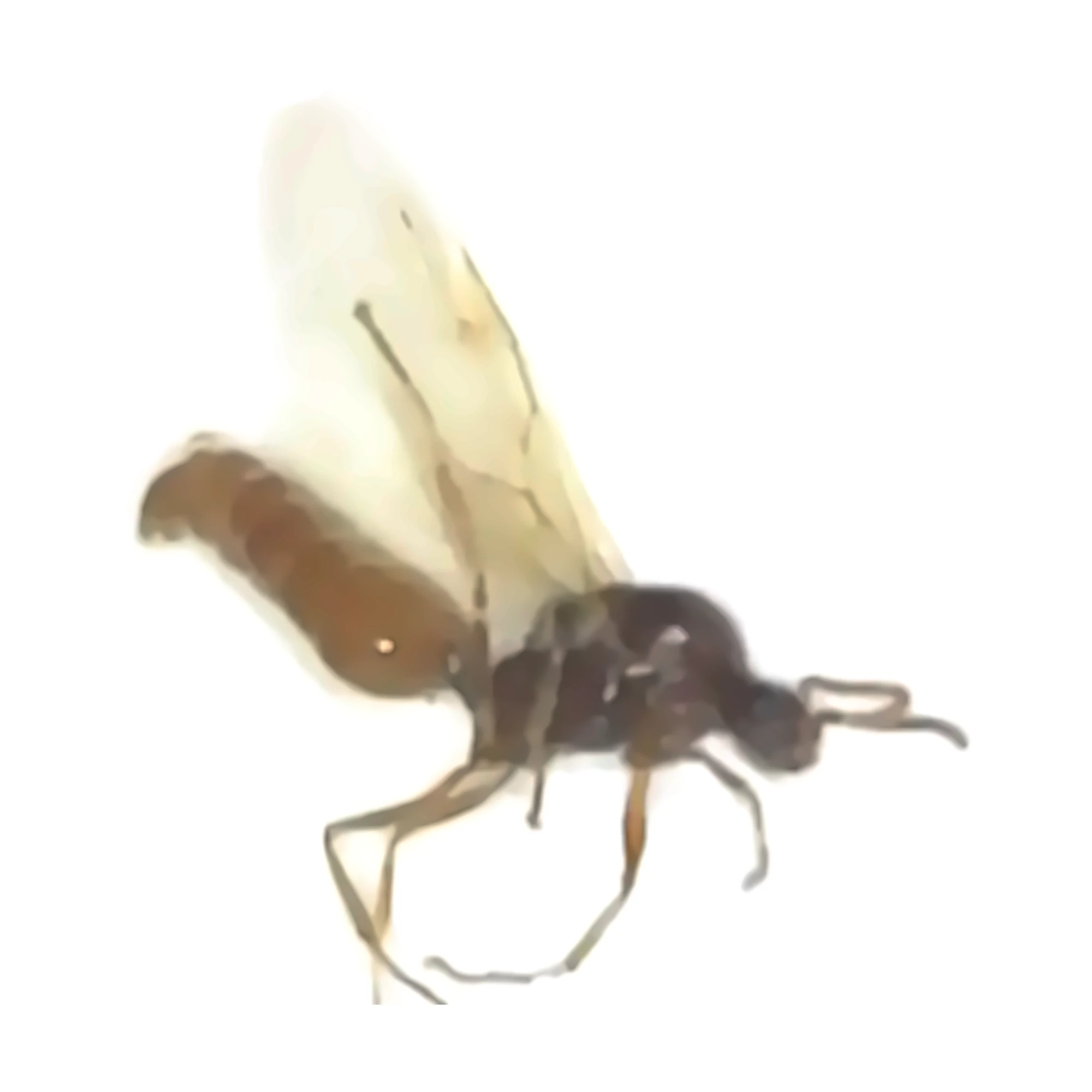
Acrobat Ants belong to the genus Crematogaster in the subfamily Myrmicinae of the family Formicidae. BugGuide lists 28 species in North America north of Mexico and close to 500 worldwide. They are small ants, about 2.5 to 3.5 mm long, with queens about twice that length. Color varies from light reddish brown to dark brown or black, and many are shiny. The best field mark is the heart-shaped gaster (the rear part of the abdomen) seen from above. The waist has two segments, and the second one joins the top of the gaster rather than its front, which lets the ant swing the gaster up over its back. Most species also have a pair of short spines on the rear of the thorax.
The genus is found worldwide and reaches its greatest diversity in tropical and subtropical regions. In North America, acrobat ants occur from the Atlantic coast to the Pacific, and they are most common in the warm, humid Southeast. Northern and desert species mostly nest in the soil, while most southeastern species nest in trees or partly in trees. Typical nest sites include dead branches, rotting logs and stumps, the abandoned tunnels of wood-boring beetles and termites, old carpenter ant galleries, and spaces under rocks. They do not nest in sound wood, only in wood that is already damp, decayed or hollowed out by other insects.
Acrobat ants get their name from their defensive posture. When disturbed, they run with the gaster raised high over the thorax and head, as if doing a handstand. Their sting is shaped like a small spatula and is used to smear venom on attackers, which is especially effective against other ants. They feed on honeydew from aphids, mealybugs and scale insects, on flower and extrafloral nectar, and on living and dead insects, bird droppings and carrion. Foragers follow scent trails and often travel along tree trunks, branches and wires.
Like all ants, acrobat ants go through complete metamorphosis (egg, larva, pupa, adult). Winged males and females leave the nest on mating flights, usually in summer. After mating, a new queen sheds her wings, finds a small cavity in dead or decaying wood, and raises her first brood herself. Once those first workers begin foraging, the queen lays larger batches of eggs and the colony grows. Most colonies are fairly small, but some reach thousands of ants.
Acrobat ants are mainly a nuisance pest. They sometimes enter homes along tree limbs, wires or gaps around doors and windows, and they may nest in wall voids, insulation or damp, damaged wood. They do not cause structural damage the way termites do, and indoors they are drawn to sweets and meats. Outdoors they are useful predators and scavengers, and in some southeastern pine forests they are among the most abundant ants and an important food for birds, including the endangered Red-cockaded Woodpecker.
This preserved specimen educates on acrobat ants, their heart-shaped gaster and their unusual defensive posture, suitable for displays or studies. Check it out on BugGuide! https://bugguide.net/node/view/31334
| Weight | 0.01 lbs |
|---|
Only logged in customers who have purchased this product may leave a review.
Reviews
There are no reviews yet.