
$3.00
 <—
1 in stock
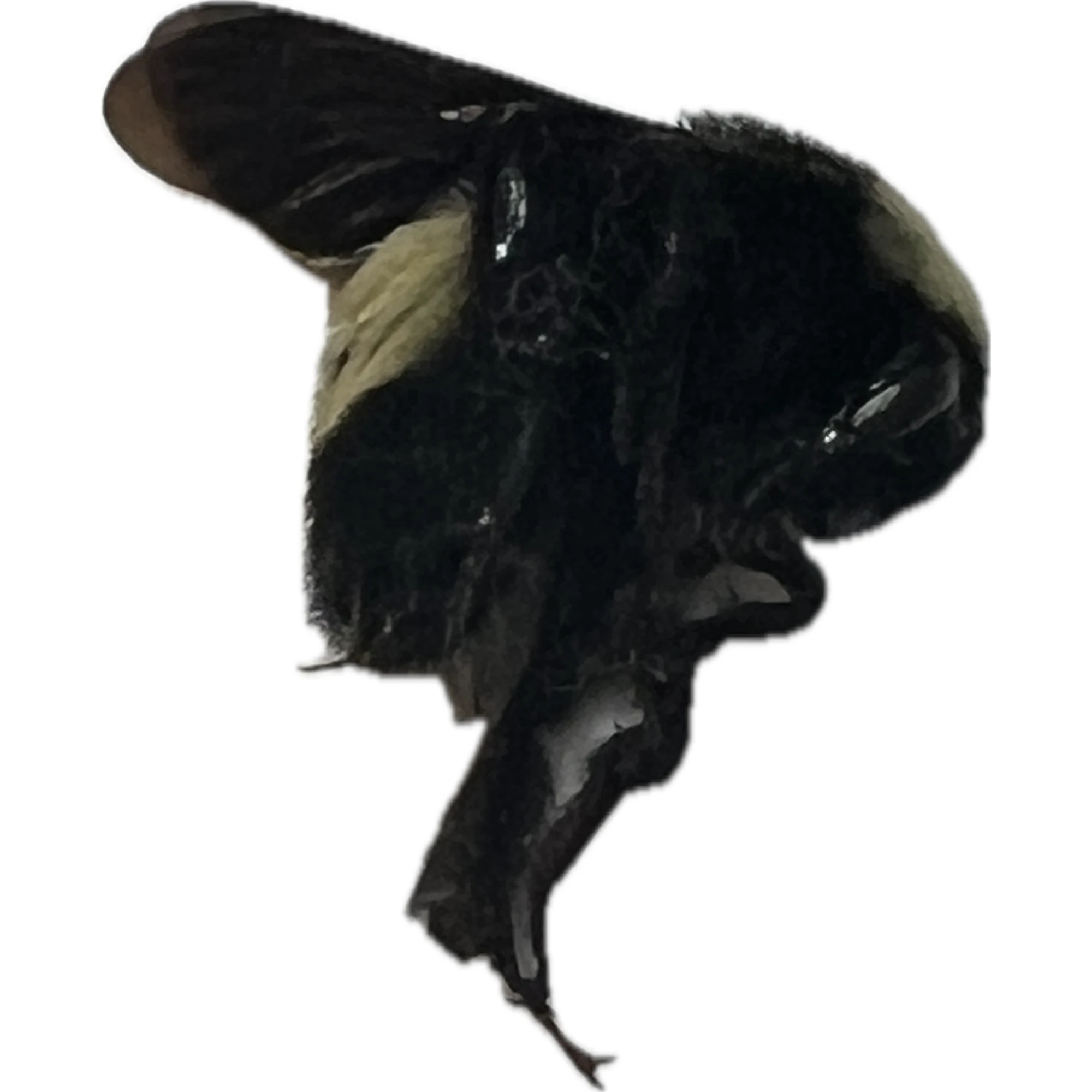
Bombus pensylvanicus is one of North America’s largest bumble bees, about 16 to 25 mm long, with queens at the top of that range. The thorax is yellow in front with a broad black band between the wings, and the first three abdominal segments are yellow while the tip is black. The face is long and black.
It is found across most of the United States and into southern Canada and Mexico, most commonly in the Great Plains, the Midwest and the Southeast. It favors open grasslands, prairies, farm fields, meadows and roadsides.
American bumble bees live in social colonies and nest on the surface of the ground in tall grass rather than underground. With their long tongue they visit deep flowers like clover, sunflowers, vetch, thistle and milkweed, and they can buzz-pollinate. They defend the nest strongly but are calm while feeding.
A mated queen comes out of hibernation in spring and builds a nest in thick grass, stocking wax cells with pollen and laying eggs. The larvae go through complete metamorphosis (egg, larva, pupa, adult). Workers forage through summer, new queens and males appear in late summer and fall, and only the mated queens survive the winter.
American bumble bees are beneficial pollinators of clover, alfalfa, sunflowers, tomatoes and many wildflowers. The species has declined sharply in parts of its range, which makes it an important bee for conservation.
This preserved specimen educates on native bumble bees and pollinator decline, suitable for displays or studies. Check it out on BugGuide! https://bugguide.net/node/view/65631
| Weight | 0.01 lbs |
|---|
Only logged in customers who have purchased this product may leave a review.
Reviews
There are no reviews yet.