Appearance
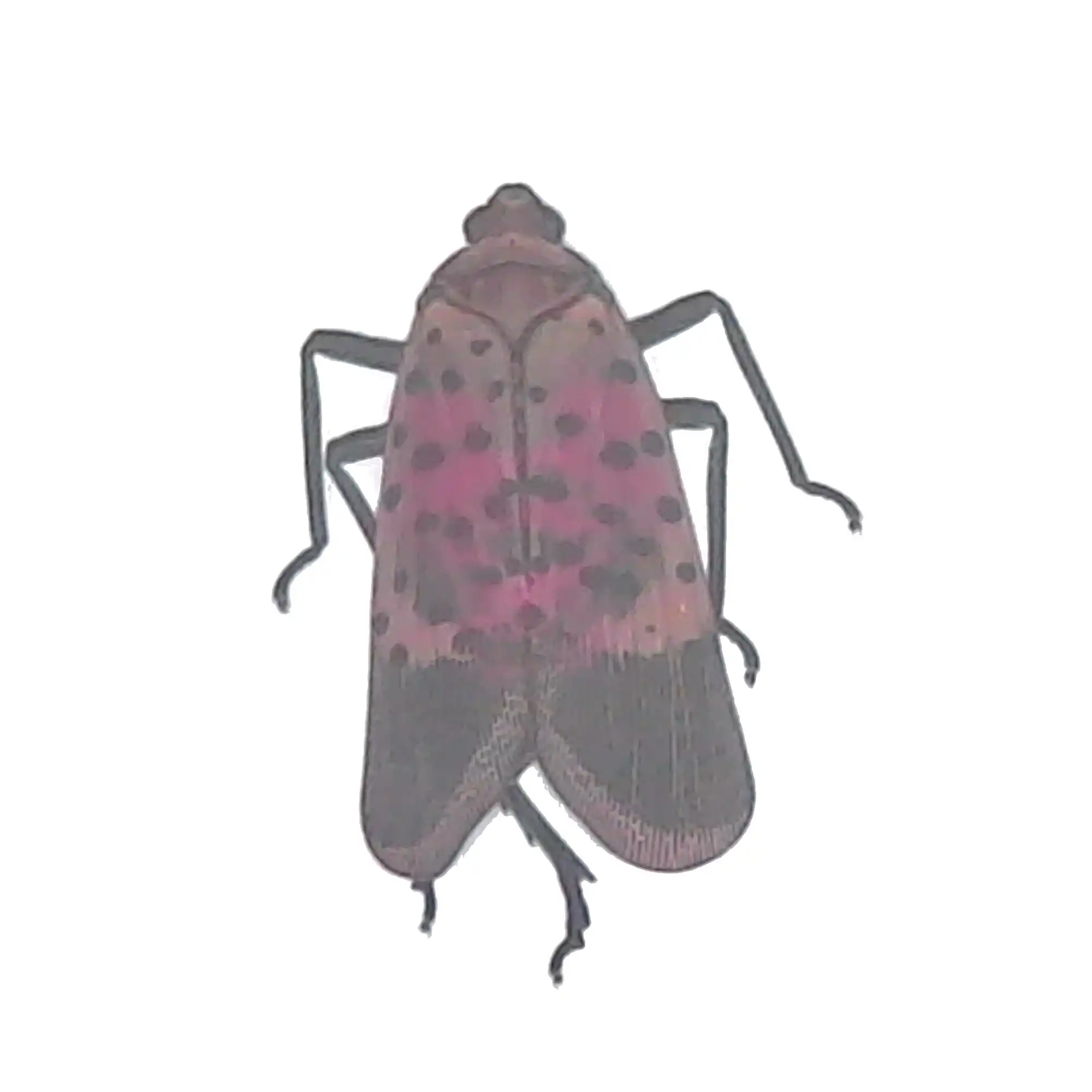
The Spotted Lanternfly adult measures about 1 inch in length. Forewings show gray with black spots; hindwings flash iridescent red, black, and white when spread. The body holds a yellow abdomen with black bands. Early nymphs appear black with white spots; later instars add red coloration. This striking pattern aids camouflage on bark.
Habitat and Range
Native to Asia including China, India, and Vietnam, it invades North America since 2014. Now established in 14 US states from Pennsylvania to Georgia, with quarantines in place. It favors woodlands, forests, and urban areas near the invasive tree of heaven (Ailanthus altissima), though it uses over 100 host plants.
Behavior
Adults and nymphs pierce plant phloem to suck sap, excreting sticky honeydew that fosters sooty mold. They aggregate in large groups on trunks, jumping or flying short distances when disturbed. Weak fliers, they climb trees to feed high up. This gregarious feeding stresses hosts and attracts secondary pests like ants.
Life Cycle
One generation occurs yearly. Eggs overwinter in masses on bark or debris, hatching in April-May. Nymphs pass four instars from May to July, molting on hosts. Adults emerge in July-August, mating and laying eggs by November before dying in winter. Cold tolerance limits spread in northern areas.
Economic Impact
As an invasive pest, the Spotted Lanternfly causes millions in damages to vineyards, orchards, and timber. It weakens grapes, hops, apples, and maples by sap loss and sooty mold, reducing yields and quality. Quarantine, scouting, and treatments impose high costs on agriculture and forestry sectors.
This preserved specimen highlights the iridescent wings and invasive traits, ideal for pest awareness education. Check it out on BugGuide! https://bugguide.net/node/view/1016519

 <—
<—