Appearance
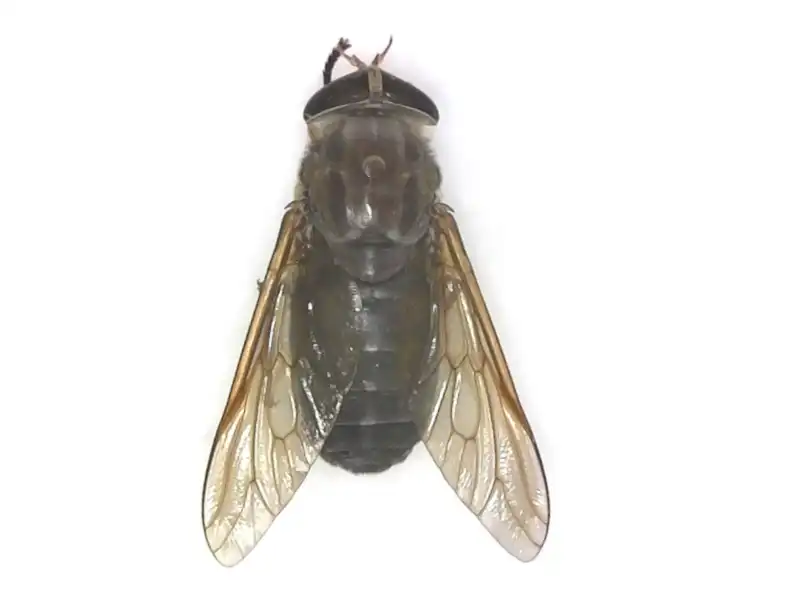
Horse Flies in subfamily Tabaninae reach 10-30 mm in length. They feature large, brilliant eyes often banded with iridescent colors. Bodies appear stout and hairy with clear or smoky wings. Mouthparts in females form strong scissor-like blades for cutting skin. Coloration varies from black to gray or brown, sometimes with stripes. This heavy build supports powerful flight.
Habitat and Range
These flies inhabit areas near water bodies like streams, ponds, marshes, and forests for larval development. Adults frequent sunny pastures and trails. The subfamily holds worldwide distribution with numerous genera in North America. Peak activity occurs in warm summer months across temperate and tropical zones.
Behavior
Females aggressively pursue mammals, including horses and humans, for blood meals needed for egg production. Bites cause sharp pain and may swell. Males sip nectar and pollen from flowers. Both sexes fly swiftly with a loud buzz. Larvae prey on invertebrates in moist soil or water.
Life Cycle
Females lay egg masses on vegetation overhanging water. Larvae drop into wet soil or streams, developing through multiple instars as predators over one to three years. Pupation happens in drier soil. Adults emerge in summer to mate and feed. One generation dominates yearly in cooler regions.
Economic Impact
Horse Flies act as pests through painful bites that harass livestock and humans, reducing productivity in agriculture and recreation. They rarely transmit diseases like anthrax or tularemia. No beneficial roles offset nuisance; repellents and traps manage populations.
This preserved specimen highlights the massive eyes and biting mouthparts, ideal for dipteran education and displays. Check it out on BugGuide! https://bugguide.net/node/view/11450

 <—See it in BugGuide