Appearance
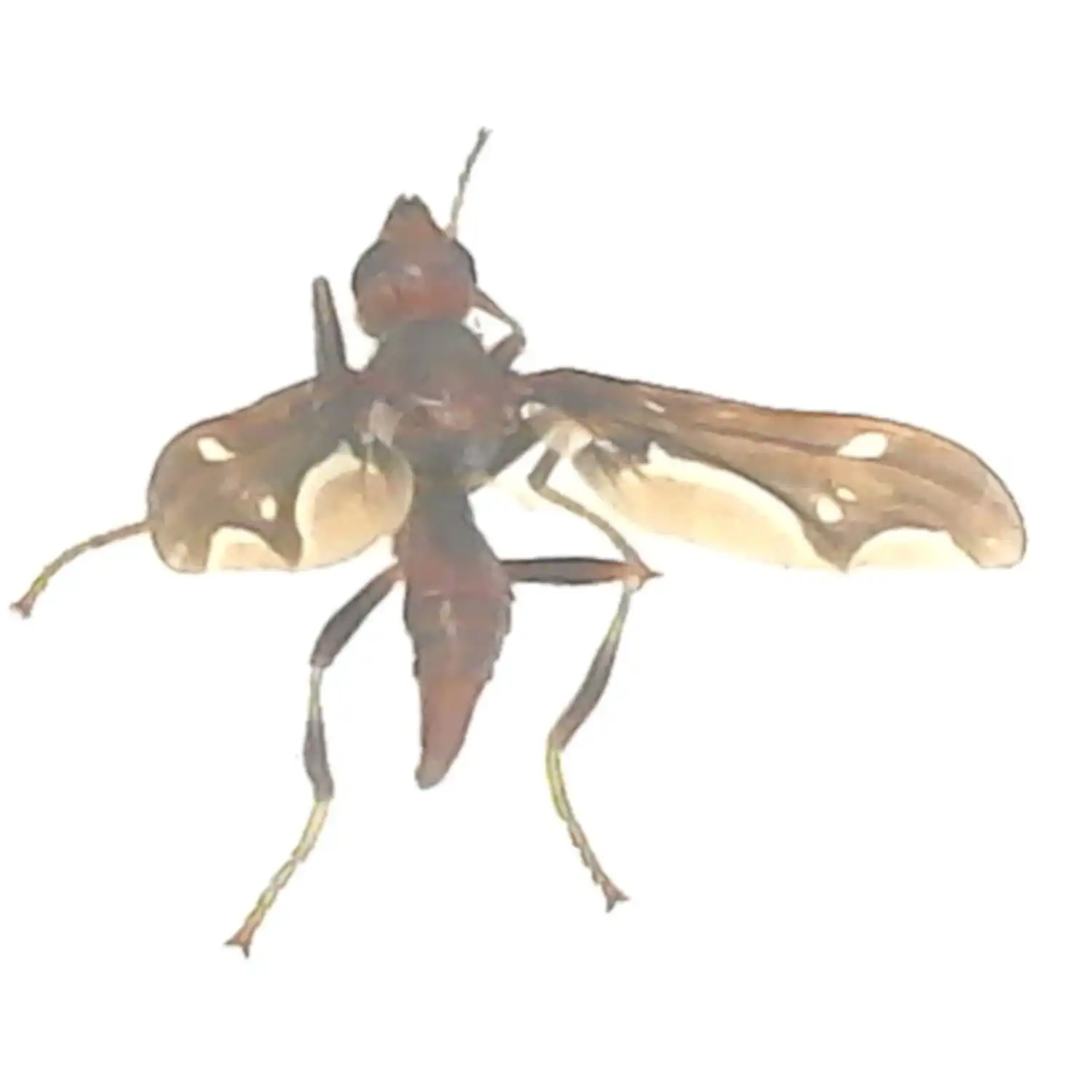
The Waved Light Fly reaches 12-18 mm in length. It features a slender, wasp-like yellow body with clear wings marked by distinctive wavy brown bands. The head shows large red eyes and short antennae. This bright coloration and wing pattern aid in mimicry of wasps for protection. Larvae appear maggot-like, developing inside host beetles.
Habitat and Range
This fly inhabits deciduous forests, meadows, and areas near lights in rural and suburban settings. The range covers eastern North America from Quebec and Ontario south to Florida, west to Texas and Wisconsin. Adults emerge in late summer and attract strongly to lights at night.
Behavior
Adults fly rapidly and mimic wasps to deter predators. They visit flowers minimally for nectar. Females lay eggs on adult June beetles (Phyllophaga species). Larvae hatch and burrow into the host, feeding internally as parasitoids. This targeted parasitism helps control scarab populations naturally.
Life Cycle
Females deposit eggs directly on host beetles in summer. Larvae penetrate the host, developing over weeks while consuming it. Pupation occurs in soil after the host dies. Adults emerge the following summer, synchronizing with June beetle activity. One generation completes per year.
Economic Impact
Beneficial as a natural enemy, the Waved Light Fly parasitizes adult June beetles, pests that damage turf and crops as grubs. This biological control reduces scarab outbreaks without chemicals, supporting agriculture positively.
This preserved specimen highlights the wavy wing bands and wasp mimicry, ideal for dipteran education and displays. Check it out on BugGuide! https://bugguide.net/node/view/7384

 <—
<—