Appearance
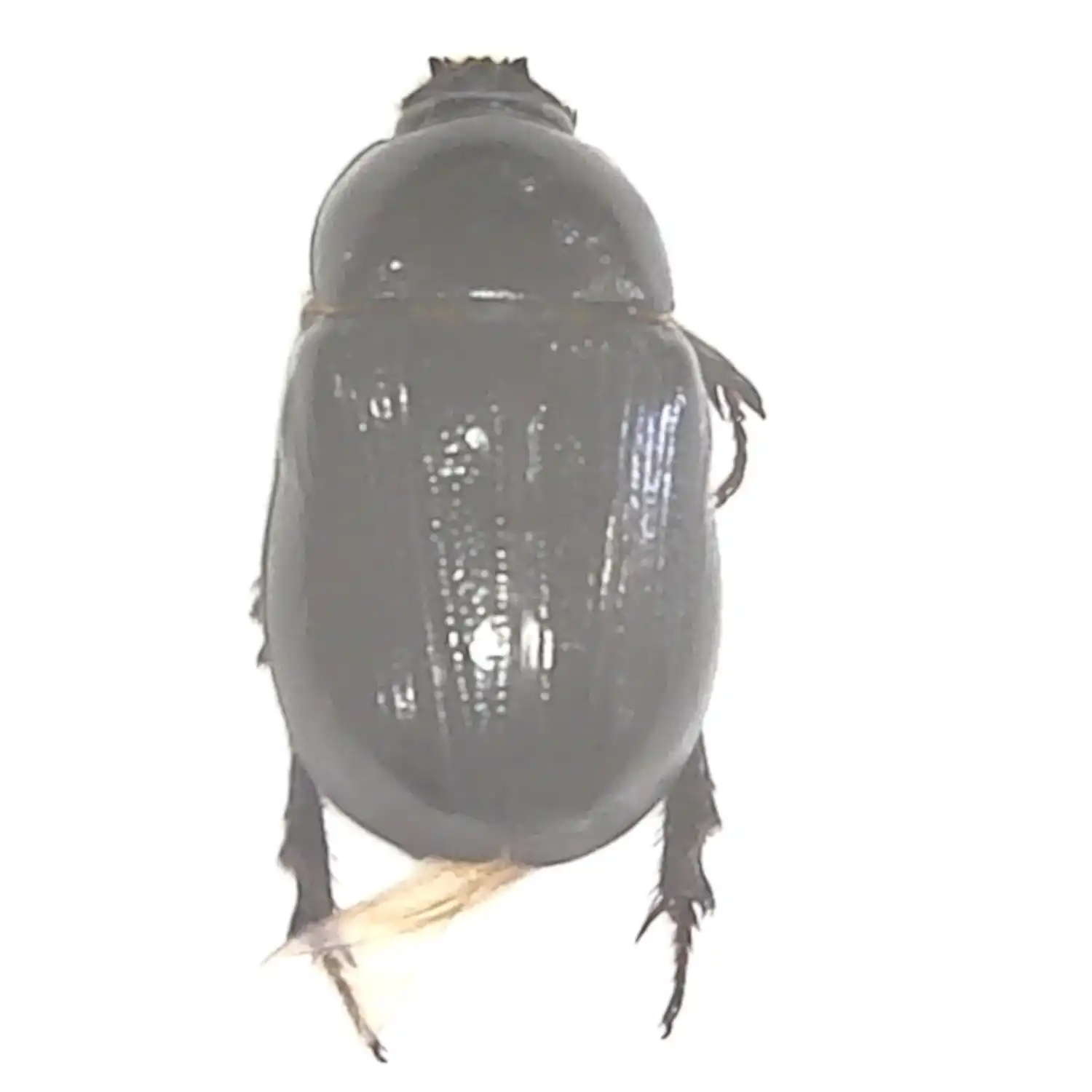
The Rice Beetle reaches 15-22 mm in length. It displays a robust, oval body with shiny dark green to nearly black coloration. The surface appears smooth and glossy. Legs feature strong spines adapted for digging through soil. Males show a small horn on the head, while females lack it. This scarab belongs to the Dynastinae subfamily, resembling small rhinoceros beetles.
Habitat and Range
This species inhabits grassy fields, pastures, lawns, and agricultural areas with sandy or loamy soils. The range covers the southeastern United States from North Carolina south to Florida, west to Texas and Arkansas. It thrives in warm, humid regions where larvae can access plant roots underground.
Behavior
Adults emerge at night and attract to lights during spring and summer. They fly actively in search of mates or new sites. Larvae burrow in soil, feeding on grassroots. Adults may chew foliage minimally. The species shows peak activity from April to August in southern states.
Life Cycle
Females lay eggs in soil near host plants. Larvae hatch and develop through three instars over one to two years, feeding on decaying roots and organic matter. Pupation occurs in earthen cells underground. Adults emerge in warmer months to mate and continue the cycle. Overwintering happens as larvae in deeper soil.
Economic Impact
As a pest, the Rice Beetle larvae damage turfgrass, sugarcane, rice, and pasture roots, causing patchy die-off in lawns and fields. This leads to economic losses in southern agriculture and landscaping. Control involves soil treatments in affected areas.
This preserved specimen highlights the glossy green body and burrowing legs, ideal for scarab beetle education and displays. Check it out on BugGuide! https://bugguide.net/node/view/43494

 <—
<—