Short Description
The Japanese Beetle (Popillia japonica) measures 9-11 mm with metallic green body and coppery wing covers. Adults skeletonize leaves; larvae damage roots. Invasive in North America since 1916. (25 words) Learn more: https://bugguide.net/node/view/473
Long Description
Appearance
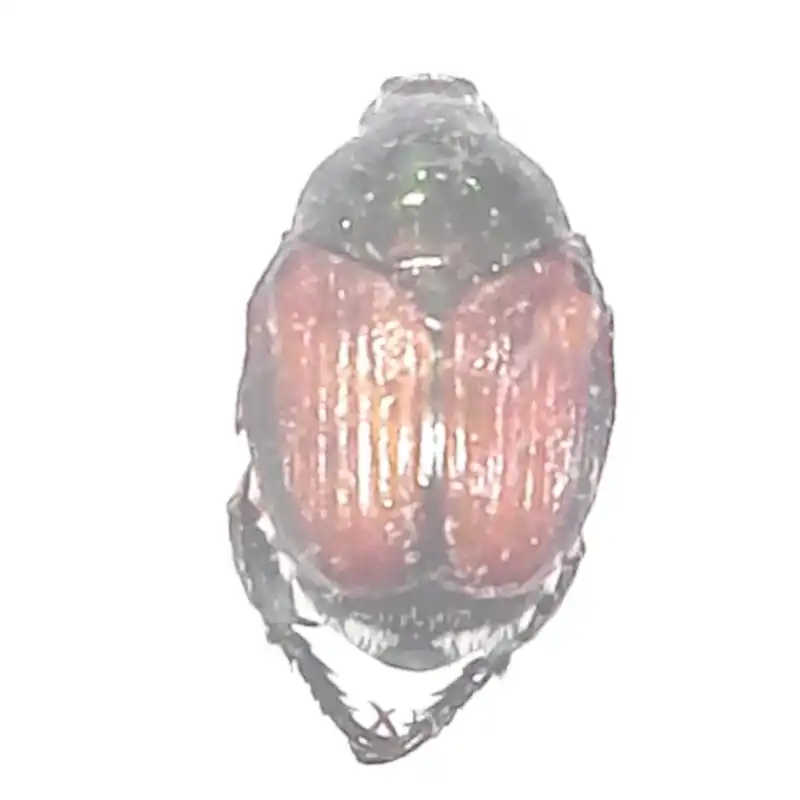
The Japanese Beetle grows to 9-11 mm in length. It belongs to the Scarabaeidae family, subfamily Rutelinae, tribe Anomalini. Adults feature a metallic green thorax and head. Coppery brown elytra cover the wings. White tufts line the abdomen sides.
Habitat and Range
Native to Japan, this beetle now thrives as an invasive species in North America. Its range covers eastern areas from Nova Scotia to Georgia. It extends west to Ontario, Minnesota, South Dakota, and Texas. Isolated populations exist in California and Colorado. First recorded in New Jersey in 1916.
Behavior
Adults feed on foliage, flowers, and fruits of over 350 plant species. Favorites include roses, grapes, smartweed, soybeans, corn silks, and overripe fruit. They skeletonize leaves by eating tissue between veins. Larvae grub on plant roots underground. Parasites include the fly Istocheta aldrichi and wasps like Tiphia vernalis.
Life Cycle
Females lay eggs in soil from June through early fall. Eggs hatch into grubs that feed on roots during summer. By fall, they reach third instar stage. Grubs hibernate 4-8 inches deep in soil over winter. Adults emerge in spring to continue the cycle.
Economic Impact
This beetle acts as a major pest in agriculture and horticulture. Adults and grubs damage crops like soybeans, corn, grapes, and ornamentals such as roses. Feeding affects over 350 species, leading to significant losses in yields and plant health. Control involves parasites and monitoring.
This preserved specimen highlights the metallic green and coppery features, ideal for invasive species education. Check it out on BugGuide! https://bugguide.net/node/view/473

 <—
<—